
While attention this week will quite rightly focus on the Senedd election, decisions in Westminster continue to have a significant impact on the economic and political landscape in which our farms operate.
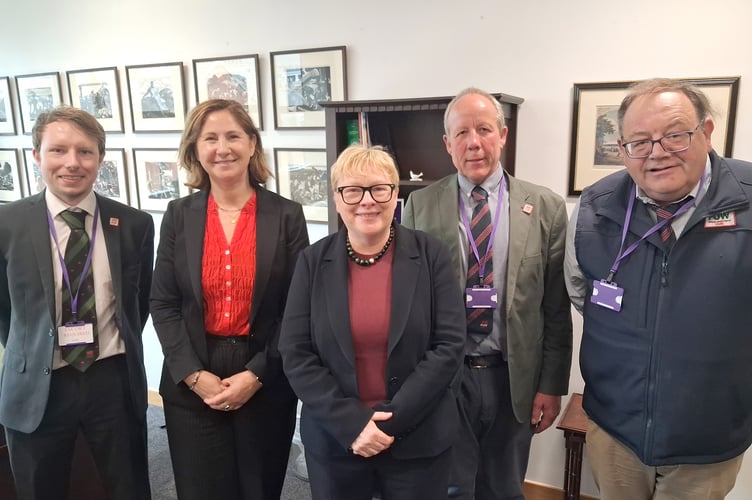
That reality was brought into sharp focus last week during a meeting in London between Farmers’ Union of Wales’ and Defra’s Minister for Food Security and Rural Affairs, Dame Angela Eagle. At a time of mounting global instability, the FUW used the opportunity to deliver a clear and consistent message: food security must be treated as a strategic, UK-wide priority.
The context for this discussion is increasingly uncertain. International conflict and disruption - particularly in fuel and fertiliser markets - are driving up input costs and exposing the fragility of global supply chains. Many of these pressures are being felt daily on Welsh farms, impacting profitability and, ultimately, the price and availability of food.
Since the escalation of conflict in the Gulf, fertiliser prices - particularly urea and ammonium nitrate - have risen by 20 to 30%, with the FUW calling for better transparency around fertiliser stocks and distribution across the UK.

During the meeting, FUW representatives stressed that such challenges cannot be addressed in isolation. The UK’s food system is deeply interconnected, with supply chains spanning all four nations. A fragmented policy approach risks undermining resilience, whereas coordinated action offers the best chance of safeguarding domestic production.
Central to the FUW’s message was the need for a joined-up and collaborative approach to both food security and farm profitability. This means not only recognising the strategic importance of agriculture, but also ensuring regular, meaningful engagement between government and the farming sector. Transparency - particularly around key inputs such as fertiliser - and improved communication were also highlighted as essential steps in building trust and stability.
Food security is too often viewed through the lens of short-term supply or price pressures. In reality, it is inseparable from the long-term viability of farm businesses, the sustainability of rural communities, and the resilience of the wider economy.
As global volatility shows little sign of easing, the need for a coherent, UK-wide strategy has never been greater. The FUW’s intervention in Westminster was both timely and necessary - providing a timely reminder that food production is also a matter of national security.
Whatever the outcome of the Senedd election, that message must continue to resonate on both sides of the M4.
Comments
This article has no comments yet. Be the first to leave a comment.