
In direct contradiction to the views of the FUW and the policies implemented by every other region of the EU, the Welsh Government chose in 2013 to annually reduce farm payments by 15 percent in order to fund what was described as an ambitious Rural Development Programme (RDP) – a decision which continues to have a severe impact on farm incomes.
For upland farmers, whose incomes are the lowest within the UK, such cuts have added to the damage done by the decision by the previous coalition Welsh Government to abandon Less Favoured Area payments.
This decision is almost unique within Europe and effectively replaced a simple and cheap to administer compensatory scheme with the hugely complex and costly Glastir agri-environment scheme, all at a time when the public funding available to administer such schemes was known to be falling.
Now we have heard from Welsh Government that there will not be an entry-level agri-environment scheme application round in 2016 - a decision which can only be described as a betrayal of the commitments which underpinned the introduction of the Glastir scheme.



Speaking at the Rural Development Programme 2014-2020 Start of Term Event in Swansea, Deputy Minister for Food and Farming Rebecca Evans told those present there would not be a Glastir Entry application round this year and that funding would be re-directed away from broad-based whole farm schemes.
Our 2016 Election Manifesto launched in November last year called for all farmers to continue to have access to Glastir Entry, so this decision comes as a severe blow for the industry.
The FUW bitterly opposed the Welsh Government’s decision to remove £25 million from Wales’ disadvantaged areas by abandoning our Tir Mynydd LFA scheme.
That money was effectively diverted to the Glastir agri-environment scheme, along with a promise that all farmers throughout Wales would be able to access the scheme.
It appears that that principle has now been reneged upon.
Around 1,600 farmers would be left high and dry from 2017 as their Glastir Entry contracts were due to end in December 2016, with a further 3,000 or so likely to be affected in subsequent years if the policy remained in place.
While other elements of the Rural Development Programme announced by the Deputy Minister, such as a small grants scheme, were welcome, none came close to meeting the original commitment to an all-Wales entry level agri-environment scheme which would be accessible to all.
The decision to abandon payments for disadvantaged areas placed Welsh farmers at a major disadvantage compared with our main competitors in other parts of the UK and EU.
Now it seems the quid pro quo offered at the time - an agri-environment scheme which would be open to all – has also been abandoned at a time when farm incomes are on the floor.
Given the state of Welsh farm incomes, we desperately need to see investment and a return to the sort of compensatory scheme which benefits our competitors across the EU.
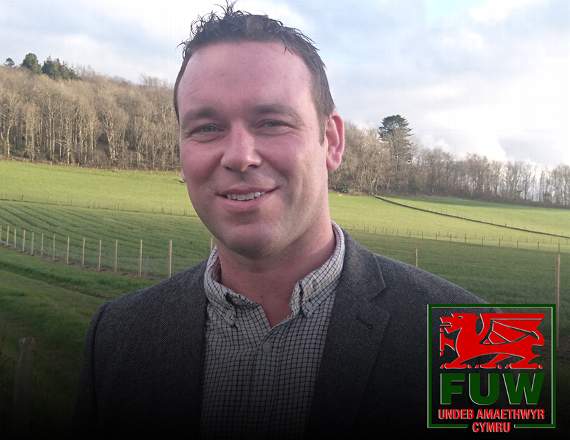
Aled Jones is FUW Brecon & Radnor County Executive Officer
Comments
This article has no comments yet. Be the first to leave a comment.