

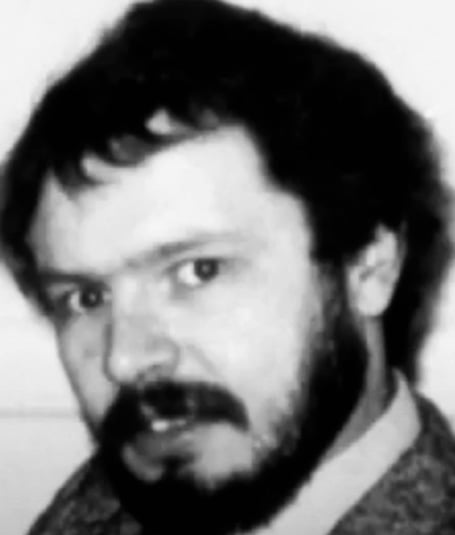
An inspection of the Metropolitan Police Service’s counter-corruption arrangements and other matters related to the Daniel Morgan Independent Panel has found that the Met has not learned all the lessons from its failed investigation into the 1987 murder of private investigator Daniel Morgan, which was hampered by police corruption.
Despite these findings, Her Majesty’s Inspectorate of Constabulary and Fire & Rescue Services (HMICFRS) acknowledged that the Met’s capability to investigate the most serious corruption allegations is particularly impressive, and other police forces regularly call on their expertise.
The inspectorate praised the Met’s confidential reporting line and its dedicated team to support whistle-blowers. It also recognised that the Met had greatly reduced the number of personnel who were not security vetted.
However, the inspectorate’s overall finding was that the Met’s counter-corruption arrangements and procedures are fundamentally flawed.

For example:
• in the past two years, the Met has recruited people with criminal connections and more than 100 people who have committed offences. Some of these recruitment decisions may have been justifiable, but the force failed to properly supervise these people to lessen the risks;
• property and exhibits procedures were dire. Hundreds of items were not accounted for, including cash and drugs. In one instance, the security access code for a property store had been inscribed on the outside of the door;
• the force doesn’t know whether all those in sensitive posts – such as child protection, major crime investigation, and informant handling – have been cleared to the level of security vetting needed;
• over 2,000 warrant cards issued to personnel who had since left the force were unaccounted for; and
• the Met still does not have the capability to proactively monitor its IT systems, despite repeated warnings from the inspectorate. IT monitoring is used by most forces to enhance their ability to identify corrupt personnel.
Her Majesty’s Inspector of Constabulary Matt Parr said: “It is unacceptable that 35 years after Daniel Morgan’s murder, the Metropolitan Police has not done enough to ensure its failings from that investigation cannot be repeated.
“In fact, we found no evidence that someone, somewhere, had adopted the view that this must never happen again. This will be understandably distressing for Mr Morgan’s family and friends, to whom we send our condolences.
“We found substantial weaknesses in the Met’s approach to tackling police corruption. From failing to properly supervise police officers who have previously committed offences, to inadequate vetting procedures, and much more besides, it is clear that the current arrangements are not fit for purpose.
“The Met’s apparent tolerance of these shortcomings suggests a degree of indifference to the risk of corruption.
“We have made several recommendations for change. If public confidence in the Metropolitan Police is to be improved, they should be among the Commissioner’s highest priorities.”
The inspectorate said it found no evidence of any deliberate or coordinated attempts by the Met to frustrate the work of the Daniel Morgan Independent Panel.
It said that although there was much to criticise, based on this inspection it would not describe the Met as institutionally corrupt.
The investigation surrounds the death in March 1987, of Daniel Morgan, a 37-year-old private investigator, who was murdered in a car park behind the Golden Lion public house in Sydenham, London. He had been struck on the head with an axe.
There have already been several investigations and reviews into Mr Morgan’s death, none of which have led to a conviction for his murder. From an early stage, there were concerns that police corruption played a part in the murder, the failure to bring his killer to justice, or both.
In 2013, the Home Secretary set up the Daniel Morgan Independent Panel (DMIP). On 15 June 2021, the Home Secretary published the DMIP’s 1,251-page report. It contained excoriating criticism of the MPS. The Panel concluded that some aspects of the MPS’s approach amounted to “institutional corruption”.
On 16 July 2021, in the light of the report’s criticism, the Home Secretary commissioned HMICFRS to inspect the MPS under section 54(2B) of the Police Act 1996.
The watchdog’s role wasn’t to reinvestigate the murder but to consider opportunities for organisational learning from all the Daniel Morgan investigations and reviews, and assess how the MPS responded to them with the investigation asked to consider the MPS’s response to the DMIP’s requests for disclosure and access to material during the inquiry, and to assess the MPS’s understanding of, and response to, police corruption.
Comments
This article has no comments yet. Be the first to leave a comment.