

Many of the older generation will have memories or experiences of living in a world where polio was rife.
Polio is a highly infectious viral disease spread person-to-person through contaminated water. It attacks the nervous system and can leads to paralysis.
It affects children under the age of 5 and, once infected, there is no known cure. Many will have known someone who suffered the effects of polio but thanks to the vaccination, it has all but disappeared. Whereas the richer countries were able to implement vaccination programmes poorer countries did not have the resources.
In 1979 Rotary International set itself the challenge of raising funds to pay for vaccination programmes in these countries and, slowly but gradually, countries and continents were being declared polio-free.



Other world organisation such as the World Health Organisation and the Bill Gates Foundation joined the campaign and now polio is endemic in only two countries, Pakistan and Afghanistan. Cases have been reduced by 99.9%. which is a remarkable achievement.
Unfortunately whilst there are still cases arising children will continue to be at risk.
Not only that but in these last two countries, polio cases occur in the most rural and isolated communities where there is an element of distrust of government officials. Medical staff who often have to trek for days to reach them, then face potential attacks.
In order to fully declare the world polio-free, no new cases of polio should occur for at least 3 years. Until then vaccination programmes must continue.
To celebrate the success of the polio eradication scheme around the world and to draw attention to the continuing fight to eliminate it from these last two regions, October 24 has been declared World Polio day. Many organisations including Rotary groups around the world use the day to raise funds for the campaign and to highlight awareness of the continuing battle.
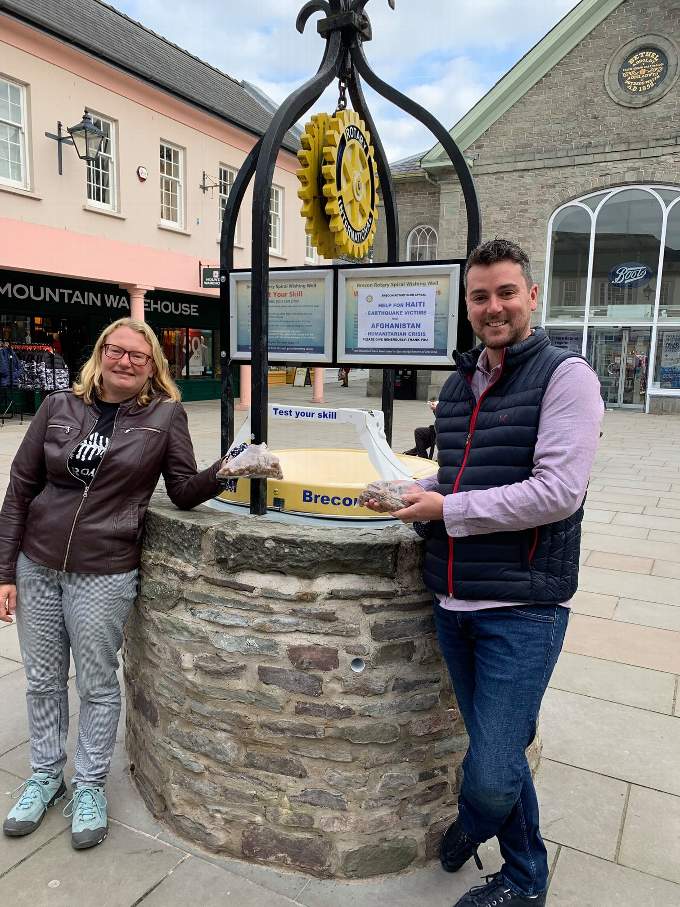
Brecon Rotary Club president Roger Reese said: “Brecon Rotary is proud to support the campaign. This year we purchased 4000 Crocus Corms and offered them to local organisations including Primary schools, village halls and the town council where they are being planted at the promenade under the “Purple4Polio” scheme.
“Why Crocus corms? The answer lies in the fact that in rural areas in some parts of the world in order to ensure that children are not vaccinated twice they dip the child’s finger into purple paint.
“So when we all see purple crocus flowers in the spring dotted around our green spaces its a reminder of the important work being done to eliminate polio.”