
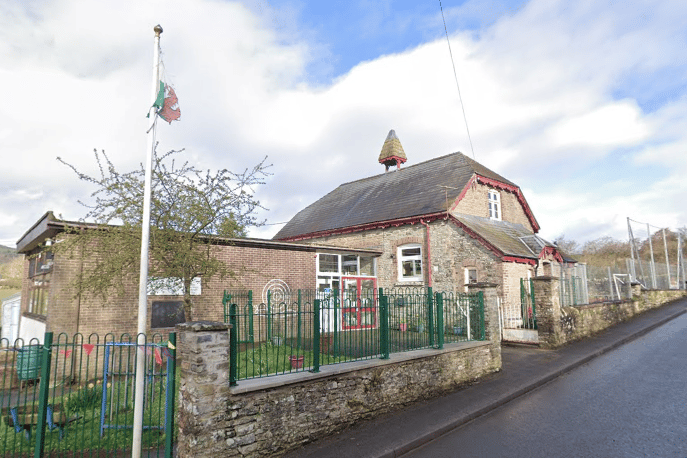
Opposition councillors have blasted proposals to close another Powys primary school.
At a meeting of Powys County Council’s Liberal Democrat/Labour cabinet today (Tuesday), a proposal was discussed to close Gladestry Church in Wales Primary School on August 31, 2027.
Gladestry is a village on the Wales-England border, 10 miles south-west of Presteigne and just over six miles west of Kington in Herefordshire.
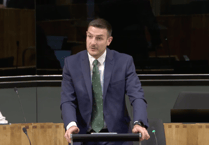
Former council leader Cllr James Gibson-Watt (Liberal Democrat – Glasbury), who is now the cabinet member for education, presented the report and explained that the need to close the school was due to its low pupil numbers.
The school has only 31 pupils, and this number is projected to fall to 19 by 2030.
The report adds that the cost of educating each pupil is £7,696, compared with the Powys average of £5,461.
The proposal has not gone down well in the area, and local county councillor Ed Jones spoke against the idea.
Cllr Jones (Powys Independents – Old Radnor) said: "When you examine your own evidence, the case for closure simply does not stack up.
"Your own documentation states that Gladestry has outstanding leadership, high standards of teaching and learning, excellent behaviour and pupil wellbeing – a thriving, positive school culture.
"This is not a failing school. It's not even an average school; it's one of the strongest-performing rural schools in Powys, if not the whole of Wales."
He added that closing the school would also have a wider impact on community events, groups and businesses, and that it is at the "heart of the community".
Cllr Jones said it was likely pupils would be lost over the border to schools in Herefordshire and would "take the funding with them".
He added that other options, such as federation or shared leadership with another school, had not been explored and that this meant the legal criteria for closing a school had "not been met".
Powys Independents joint group leader Cllr Beverley Baynham (Presteigne) said: "Today we see the outcome of the catchment area review, and the result is the proposed closure of Gladestry.
"I fully appreciate the need for school transformation, and the need to close some schools can be justified."
She went on to list several other catchment areas in Powys, such as Ystradgynlais, Gwernyfed and Welshpool, where several small schools had been closed but replaced by a larger new-build school.
Cllr Baynham said: "Yet in East Radnorshire we've had closure after closure and no investment. Zero. Nothing.
"In the last 40 years, Llangunllo, Bleddfa, Beguildy and Llanfihangel Rhydithon primary schools, and John Beddoes High School, have all closed.
"At present we have Knighton, Presteigne, Gladestry and New Radnor, and a secondary school called Newtown High School in the middle of Presteigne."
Despite being nearly 30 miles away, Newtown High School runs the John Beddoes secondary school campus in Presteigne.
She pointed out that the catchment review report stated that the "biggest issue" was with secondary provision.
Cllr Baynham continued: "Yet this paper has chosen to completely ignore this. Is it any wonder why we are haemorrhaging pupils over the border?
"Is that what this cabinet wants to see?
"Do our pupils not matter?"
Cllr Gareth E Jones (Powys Independents – Llanelwedd) pointed out that it would actually cost the council £12,000 a year to close the school, which did not factor in the loss of pupils to schools outside the county or additional transport costs.
Cllr Gibson-Watt defended the proposal and said: "I understand her (Cllr Baynham's) frustration, but formulating education provision in East Radnorshire that is sustainable in the long term, with very low pupil numbers, a sparse population and small communities, is not easy.
"Not least because of the proximity of this area to the English border and the availability of good-quality education not many miles away across that border.
"We've been through every permutation and option for education you can think of in the Presteigne catchment. There are no easy or good answers to this.
"The proposal is the most pragmatic solution to the situation we face at the moment."
He added that the "outlook could change" depending on what the consultation process brought up and that no final decision on the school's closure had been taken.
The proposal was then put to cabinet and agreed unanimously.
Comments
We've recently changed our login process. If you have an account for commenting, you will need to re-register on the login window.
This article has no comments yet. Be the first to leave a comment.