

HI, I’m Morgan a full-time volunteer with the woodlands team for the Brecon Beacons and Monmouthshire National Trust.
It’s been a busy six months or so since I moved here from Northamptonshire so hopefully I can give you an insight into working and living in the Brecon Beacons.
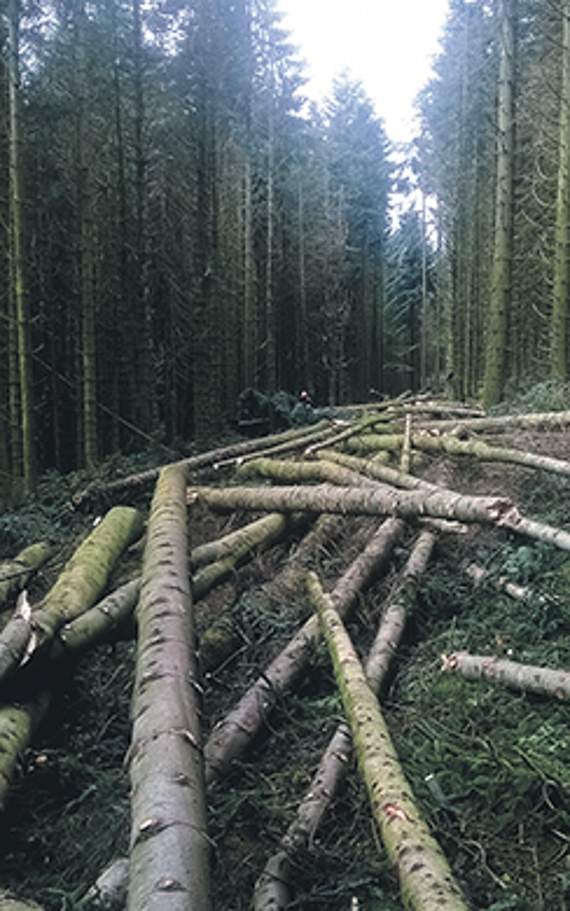
A lot of my working time has been the development of a forestry track in the conifer plantation at Pont ar Daf. Those of you who have walked up to Corn Du or Pen y Fan in the last six months may have walked past the woods if you took the Storey Arms or Pont ar Daf paths, you may have even heard the chainsaws.
The aim of the project was to increase the length of the original track, allowing a full circuit of the woodland to improve future access and management. The long term management of this woodland involves felling coupes (half hectare blocks) from the inside working outwards, with a replanting scheme of native hardwoods (60%) and natural regeneration of conifers (40%). This is a 50 year plan, showing there are no quick fixes in woodland management. I was straight into felling in my first week under the watchful eyes of Stuart and Tim, the woodland rangers. I had the chance to tackle much bigger trees than I’ve ever felled before and quickly became comfortable and more efficient in the routine of felling and neatly stripping down trees of their branches, ready for extraction.



Once the felling was completed we began extracting the timber. Each tree has been graded and, depending on its quality, was cut to length to be sold, ending up as saw mill logs or fencing stakes for example. Whilst extracting timber, a local contractor helped level the ground, install drainage pipes and stone the track. The drainage in particular is vital in an area with such high annual rainfall. Being so important, they required suitable protection on both the inlet and outlet sides, using large stones in a dry-stone wall style to retain the earth and stone behind it – especially with heavy forestry machinery using the track.
Outside of work, I’ve been lucky enough to live in the Tarell Valley. The diversity of wildlife found in this fairly wooded valley has been a pleasure to watch in my spare time. With so many areas to explore from the front door, I’ve been spoilt for choice.
The conditions at these higher altitudes provide different habitats for species I have never seen in the lowlands of the Midlands such as the golden ringed dragonfly, wood wasp and regular dipper sightings on the Tarell river.
I’ve spent a lot of time in Carno wood, where the National Trust has done a lot of positive management over the last 25 years. It provides a lovely display of bluebells earlier in the year and is bursting with breeding birds in spring – many of these have travelled from Africa to nest in Britain, including willow warblers, chiff chaffs and wood warblers.
I’d really recommend trying to visit this woodland, early spring mornings are almost deafening with the vast array of birdsong. Seeing the seasons change and the wildlife that comes and goes with those changes has been a privilege. The pictures of the stream show the variation in flow rate after a period of heavy rain in early March and over a month of unseasonably dry weather in late April.
Joining the team has been a fantastic experience, I’m learning and improving my skills every day and hopefully it will result in gaining future employment in woodland conservation and forestry.
I’d recommend a position like this to anyone considering a similar career path.
Cheers, Morgan