

THE Welsh Government has outlined a new support scheme intended to replace the European Union's Common Agricultural Policy.
The subsidy system, known as the CAP, has driven agriculture in Britain for the past 40 years but the country's intended withdrawal from the EU has forced a rethink.
The CAP is worth around £300 million a year to Wales with payments made directly to farmers under the Basic Payment Scheme (BPS), under the Glastir environmental scheme or through the Rural Development Programme.
But the Welsh Government is proposing two new schemes, an economic resilience scheme which would provide grants to make businesses, including farms, more competitive, and a public goods scheme.


The public goods scheme would provide a new income stream to land managers for providing "public goods" from their land - that is managing their land in a way to enhance or improve the environment or habitats, address issues such as climate change or poor air and water quality or maintaining the scenery of the Welsh countryside.
The public goods scheme would differ from the CAP as rather than making payments based solely on land ownership cash would be based on "outcomes" from how the land is managed.
All land managers will have the opportunity to benefit from the new schemes, not just those currently receiving CAP, and that could see a wider range of people and groups entitled to support, from big estates to allotment owners.
Payments from the new schemes could be introduced from 2020 with BPS payment phased out. The Welsh Government's aim would be for the new models to be fully in place by 2025.
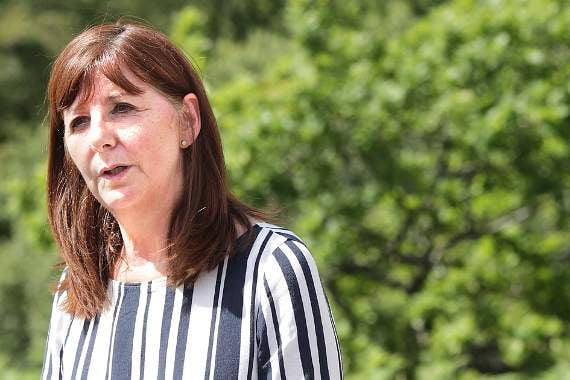
Lesley Griffiths, the cabinet secretary for rural affairs, visited the Cnewr Estate, at Crai near Sennybridge, to announce a consultation on the Welsh Government's proposals.
The 12,000 acre farm includes the Crai reservoir and its owners, brother and sister James Lloyd and Rachel Chapel, must face the harsh climate of the Brecon Beacons and manage their stock in line with the Wales wide conditions of the Glastir scheme to qualify for additional payments.
Ms Griffiths said the two schemes proposed by the government are intended to provide a balance between supporting rural businesses and the environmental benefits the government wants to see.
Ms Griffiths said: "Rachel and James are responsible for the whole of this catchment area unless they're in Glastir, which I think they are, they wouldn't get paid for that. So it's really important that the public goods that people value so much our land managers are rewarded for that.
"The economic resilience scheme is about food production, it is about making sure that timber is out there, those are the two, I would say the main parts of the economic resilience scheme."
Farm manager Rachel Chapel said their farm and others in the area had previously been a part of a marketing scheme that supplied Brecknock hill cheviot lambs direct to Marks & Spencer.
She said: "Local suppliers all got together to produce and supply M&S. We'd take lambs down to Sennybridge market and they'd go off to M&S every week. The money that's coming in on business side of things that's the sort of thing that it would be really useful to have money to help groups like that get up and going again, support them and we can market direct from our farm rather than other ways."
The Welsh Government is consulting on the proposed schemes until October and inviting feedback on the plans.
'Most farmers supported Brexit' - see this week's Brecon & Radnor Express for more on this story - on sale now