

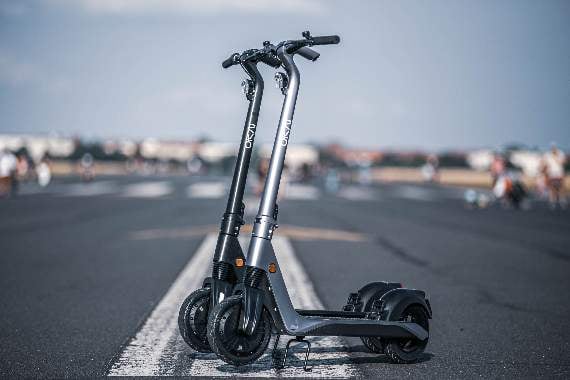
Wherever you are in the UK, it seems like it is now impossible to go out without seeing somebody whizzing around on an electric shooter.
While privately owned motorised scooters are growing in popularity and use, they are not actually allowed on public roads, cycle paths or pavements in Britain - including in Wales.
E-scooter owners in Powys who are considering using the compact vehicles - which are bound by the some legal requirements at other forms of motor vehicles including the need for a full or provisional driving licences - risk being fined hundreds of pounds as well as points on their driving licence if used in a public place.
Dyfed-Powys Police took to Facebook last week to remind residents that E-scooters can only legally be ridden on private land with the permission of the landowner - everywhere else is illegal.



The force said: “Anyone considering purchasing or using an e-scooter on public roads, pavements or cycle paths risk being issued with a £300 fine as well as six penalty points on their driving licence and having the e-scooter seized.
“Additionally, for any driver or motorcyclist that has passed their driving test in the last two years, it could result in a driving disqualification and the need to re-take both the theory and practical test.”
While trials of rental e-scooters are taking place in some parts of England, the force emphasised that they should only be used within the local areas which are hosting the trials.
Chief Inspector Thomas Sharville or the specialist operations department pointed out that the speed and silence of e-scooters means they can post a “significant danger to other road users and pedestrian safety”.
He said: “I would remind anyone considering purchasing an e-scooter that it is illegal to use a privately owned e-scooter on public roads, pavements or cycle paths.
“Their speed and silence can pose a significant danger to other road users and pedestrian safety, especially vulnerable pedestrians.”
Also growing in popularity is so-called e-bikes, or electric bicycles, however they are legal to use in the UK on public roads providing the rider is over the age of 14 and that it has pedals.
Unlike e-scooters, electric bikes do not require a provisional or full driving licence although the motor must not exceed 250 watts and the bike must not go faster than 15.5 miles per hour or 25 kilometres per hour.
Provided the above criteria is met, e-bikes are held to the same regulations as usual push bikes such as: being well-lit at night; having an efficient front and rear braking system; not riding under the influence of drink or drugs; not cycling without due care and attention of other road users; riding using a designated cycle lane or the road while paying attention to regular road rules such as stopping at a red light or giving way; not carrying passengers unless the bike has been adapted to allow it; and, not holding onto a moving motor vehicle or trailer.
It is also illegal for an e-bike to use a “twist-and-go” throttle which allows the bike to go more than walking pace - 4mph - without any pedal assistance as they are then classed as motorbikes and have to be registered with the DVLA as well as insured and taxed.
Comments
This article has no comments yet. Be the first to leave a comment.