

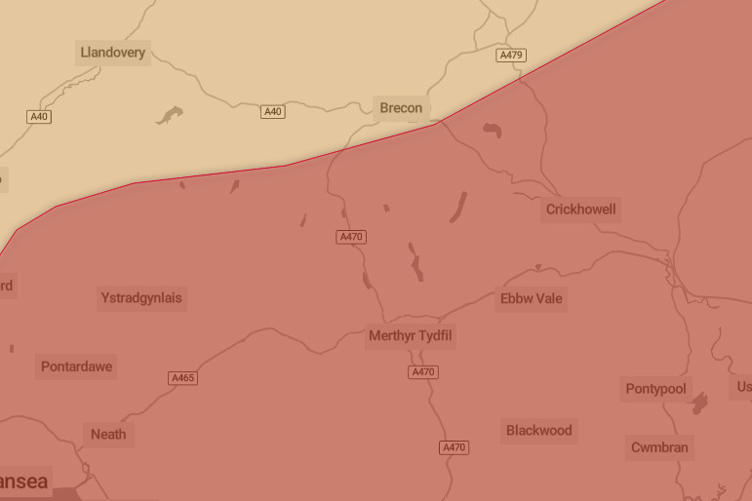
A rare red warning for extreme heat has been issued by the Met Office as temperatures are set to climb to potentially dangerous levels across parts of the country this week.
The warning runs from 9am on Wednesday until 9pm on Thursday and covers large parts of the B&R patch, including Crickhowell and much of the Swansea Valley, including Ystradgynlais. Brecon itself lies just outside the red zone but remains under an amber heat health warning.
It comes as an amber warning for heat covers the whole of Wales and much of the UK during the first half of the week.
The Met Office has warned of an “exceptional spell of hot and humid weather”, with temperatures expected to exceed 37C widely within the warning area and potentially reaching 38C to 40C in some locations.



The forecaster said: “During the heatwave expected to affect a large part of England and Wales this week, the highlighted area now looks increasingly likely to see a two to three day period where maximum temperatures in the shade exceed 37 Celsius, perhaps rising to 38 to 40 Celsius in some places. The heat will be accompanied by high humidity, exacerbating the potential for discomfort and health impacts, with very warm and humid night times also reducing the ability for people to recover overnight.
“Significant disruption to daily life is likely and the public should take every effort to make precautions and adapt their daily routines where possible to cope with these levels of heat, which up to now have been extremely rare for the UK.”
What people should expect
The forecaster has warned the upcoming red heat warning could bring widespread disruption and pose a risk to public health across affected areas.
It says adverse health effects are likely to be experienced across the population, not just among vulnerable groups, with the potential for serious illness or danger to life.
People are also being warned to expect significant changes to daily routines and working practices as temperatures rise.
There is a risk of disruption to essential services, including possible impacts on power, water, electricity, gas and mobile phone networks due to heat-sensitive systems failing.
Transport is expected to be affected, with delays on roads, possible closures, and disruption to rail and air services. The Met Office said even short delays could cause welfare issues in extreme conditions.
It also warned that more people are likely to head to coastal areas, rivers and lakes, increasing the risk of water-related incidents.
Advice from the Met Office
People are being urged to take steps to reduce the risk of becoming unwell in the heat, including drinking plenty of fluids, staying out of direct sunlight, and avoiding physical activity during the hottest part of the day between 11am and 3pm.
Homes should be kept as cool as possible by closing curtains in sun-facing rooms. Those going outside are advised to carry water, stay in the shade where possible, and wear sunscreen and a hat.
The public is also being reminded to take care around water, including entering gradually to reduce the risk of cold-water shock, using lifeguarded or supervised areas, and knowing how to float if in difficulty.
Drivers and public transport users are being urged to plan ahead, check travel updates, and carry water. People are advised to look out for others who may be struggling in the heat and to seek fresh air if feeling unwell.
Vulnerable people, including older residents, those with underlying health conditions and people living alone, may need additional support to stay cool and hydrated. NHS 111 should be contacted if there are concerns about health.
Comments
This article has no comments yet. Be the first to leave a comment.