
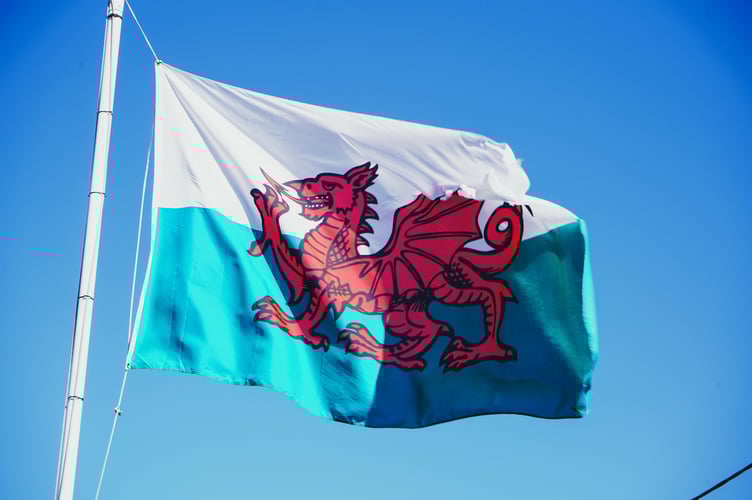
This month marks the 200th anniversary of the 1822 Brecon Eisteddfod, held September 24 and 25 that year. It was a significant event, although very different from the Eisteddfodau of today,
The tradition of Eisteddfodau – meetings and competitions celebrating Welsh language, music and poetry – goes back to medieval times, but later fell into decline. However, the Corwen Eisteddfod of 1789 marked a revival of interest in Welsh culture, supported by groups such as the London-Welsh Gwyneddigion Society. Around the same time, poet, antiquarian, radical and master forger Edward Williams from Glamorgan, better known as ‘Iolo Morgannwg’, was busy rediscovering (often actually inventing) traditions such as the ‘Gorsedd’ of bards, which came to form an important part of Eisteddfodau. The radical views of men like Iolo meant their meetings were viewed wth suspicion by the authorities and effectively shut down during the Napoleonic Wars.
After the wars ended, Brecon was the fourth in a new series of Eisteddfodau. Meetings rotated between the ‘provinces’ of Wales – Brecon was in the province of Gwent, which also included Radnor, Glamorgan and Monmouth. These were very different both from the earlier events, and from those of today. As well as Welsh scholars and poets, the 1822 Eisteddfod was enthusiastically supported by the local gentry and town bigwigs. Many of these would have been English-speaking and much of the proceedings were held in English, with competitions for essays in English being added to those for poetry in Welsh.
Musical concerts formed a particularly important part of the events. Perhaps most surprising was the very patriotic tone of the proceedings – the main subject for a poem was on the period of the Regency up to the ‘Glorious Victory at Waterloo’.


Some of the most important figures of the Welsh cultural revival attended the Brecon Eisteddfod including Iolo Morgannwg himself, his son Taliesin Williams and the Rev. Thomas Price ‘Carnhuanawc’, a Breconshire clergyman and significant scholar. The main music prize was won by Henry Humphries of Welshpool and the silver harp he was awarded is now in the Amgeuddfa Cymru/National Museum of Wales. The main poetry prize was won by William Ellis Jones, ‘Gwilym Cawrdaf’, who was then seated in the ‘bardic chair of Gwent.
It is refreshing to read of a time when many of the English-speakers of Breconshire showed a real enthusiasm for Welsh language and culture. It may also seem surprising today that many of the Welsh scholars and poets were Anglican clergymen rather than non-conformist ministers.
However, not everyone shared this enthusiasm for all things Welsh: notable for his absence was local MP Thomas Wood who had previously expressed the opinion that Welsh was a backward language which was holding back development. Sadly, over the following decades, Wood’s view was to become more common. The gulf between English and Welsh speakers – and between church and chapel – became wider, more politicised and often more bitter.
Further Eisteddfodau were held at Brecon in 1826 and 1889. Surprisingly, it was not until about 1950 that the National Eisteddfod became a strictly Welsh language only event.
If readers would like to know more about the 1822 Brecon Eisteddfod, an ‘occasional paper’ has been published on the Brecknock Society and Museum Friends website www.brecknocksociety.co.uk (see under the ‘resources’ menu).
Comments
We've recently changed our login process. If you have an account for commenting, you will need to re-register on the login window.
This article has no comments yet. Be the first to leave a comment.