
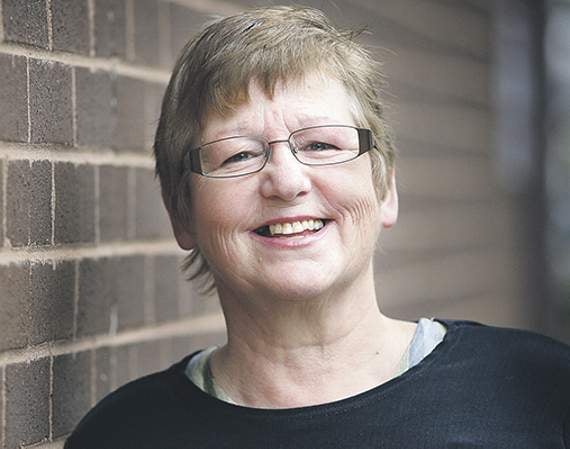
A LIFE-altering device is being denied to Welsh patients because of slashed funding.
That’s the message from Brecon resident, Alison Meacham, who recently received a Sacral Nerve Stimulaton implant (SNS) which, she claims, has improved her life immeasurably. SNS can be used to treat urinary and faecal incontinence as well as urinary retention. The NHS estimates that between three and six million people in the UK have some degree of urinary incontinence.
Since early childhood, Alison, aged 61, has suffered from urge incontinence.
Talking about the cut, Alison said: “I was gutted when I found out they’d cut funding for the treatment and so grateful I had the procedure when I did.” She believes that the device would have a massive impact on the lives of thousands of men and women if the finance was available.



“Life before SNS was very different. One of my earliest memories as a young child is of sitting on the toilet crying with the pain of cystitis and frequent bed wetting. I always needed to use the toilet urgently, often at the most inconvenient times. It was like having the bladder of a two-year-old. In a previous job as a sales rep I knew every toilet in every service station up and down the M4 and M5.”
Urge incontinence is caused by an overactive bladder muscle and over the years various drug therapies were tried and after some initial minor success, all failed.
“Three or four years ago I had an appointment with a gynaecologist at Nevill Hall hospital, who suggested that ‘botox’ injections into my bladder might be the best solution to the problem. Botulinum toxin works by blocking the nerves that make bladder muscles contract. The downside to that is, you no longer have the urge to urinate and must intermittently self-catheterise throughout the day to empty your bladder. Catheterisation also increases the risk of urinary tract infections and ‘botox’ injections have to be repeated every six months or so.”
Alison’s initial appointment with an urology surgeon at the Royal Gwent to have the injections was delayed, which she now says she feels grateful for, because she was instead seen by consultant Mr Talal Jabbar. Following urodynamics testing, to discover what the problem was, Mr Jabbar suggested that the SNS implant would be the better solution.
Describing the procedure, carried out at the Urology Day Surgical Unit at the Royal Gwent Hospital, Alison said: “The procedure is done in three phases: trial; implant and programming of device. The trial took place on February 15 and involved four electrodes being inserted through my skin, the tines of which were placed in the area of the sacral nerves which control bladder function. The device was taped to my lower back for two weeks to measure its efficacy. During that time I had to keep a diary and there was a huge decrease in the number of times I needed to urinate. The implant isn’t suitable for everyone but it worked for me. On March 1 I had the SNS implant. The device is made of titanium and is approximately the size of a £2 coin. It was placed into the top of my right buttock and the tines attached to the sacral nerves. The procedure was minimally invasive and caused only minor discomfort.”
A week after the device is implanted, the patient returns to the hospital to have it programmed on one of four settings using a master programmer. The setting best suited to the patient is decided when they can feel a pulsing at the base of their spine. Patients receive an identification card which has details of surgeon and device plus a telephone helpline provided by the manufacturer, should they require further information.
Alison said: “ I am able to vary the settings of the device using a small controller. By holding it against the implant site I can read what setting it’s on; the strength of the impulse etc. It’s good for patients to have control and not have to go back to outpatients’ clinics all the time.”
The implant will need to be replace once its battery runs out, however it is thought to last at least ten years.
“The SNS device is brilliant, I can now sleep all night without having to use the loo two or three times. It’s also beneficial for my husband as it means I’m not disturbing him by getting up. I can now enjoy hiking; cycling; swimming and running around with my grandchildren. Extreme sports that involve excessive twisting and turning are banned because they might dislodge the wires but I never did skydiving or trampolining before anyway. I now have fun setting off the alarms on supermarket scanners.”
Alison has been asked to talk to continence nurses about her experience and is happy to do so if it means helping other patients.
“SNS doesn’t cure urinary incontinence but it has given me control over my bladder for the first time in my life. Pre SNS I needed to go to the loo two to three times an hour, now I can go two to three hours between visits. I can’t thank Tal Jabbar and his team enough for their care and professionalism and the huge improvement to my quality of life. Please restore the funding for SNS so that many more patients can benefit as I have.”
Mr Talal Jabbar, who specialises in female functional reconstructive urology, has said that while funding for the implant was approved for 19 patients, including Alison, it can no longer be funded.
The implant, which has been approved by the National Institute for Health and Clinical Excellence (NICE) within the NHS, is subject to a postcode lottery for the treatment which is still available in England. He said he believes Wales are receiving a “second rate service”.
He said: “I think it’s partly because it’s primarily a women’s issue that it’s not given the attention and funding it serves.”
He added that in the long term he believes it to be a safer alternative for patients which offers a better quality of life. He went on to say it proves to be more cost-effective compared to other therapies for certain conditions such as Botulinum Toxin A (botox) injections, catheters and the need for incontinence pads.
Mr Jabbar, who is currently working towards reversing the cuts, said: “Sacral nerve stimulators should be a core treatment, this is commissioned in England and is a treatment which is widely offered to English patients. It’s embarrassing we don’t have it in Wales.
“A few Welsh patients received approved individual patient funding and have been sent to England to have SNS, while it would be much cheaper and convenient for Welsh patients if they received treatment locally.”
Mr Jabbar has said that he believes SNS should receive direct funding from the Welsh Government to regional centres, similarly to cancer treatment funding.
In response to Mr Jabbar, a Welsh Government spokesperson said: “NICE agree this procedure may be appropriate treatment for some patients but should be undertaken in specialised units. “If health boards do not have such specialised facilities, we would expect them to have routine arrangements in place for patients to receive the care elsewhere.”