

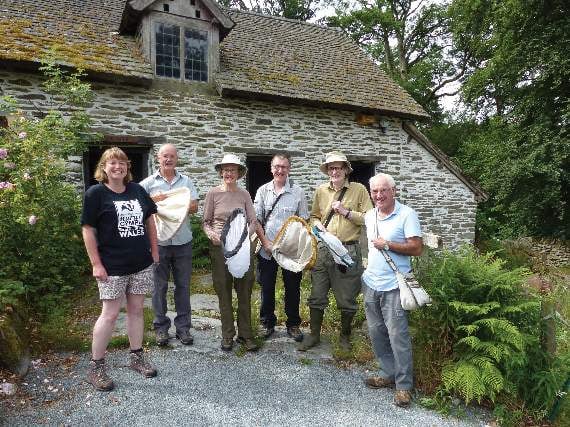
A RARE bee has caused a buzz among insect lovers at a Radnorshire nature reserve.
The rare bee is called Eucera longicornis, more commonly known as the long-horned bee because of its strangely long antenna, and is normally seen in warmer climes in western Europe and Asia.
It was spotted during a Pollinator Training Day at Radnorshire Wildlife Trust’s Gilfach nature reserve.
The training day was being held as part of the Exploring Gilfach Project, funded by the Heritage Lottery Fund and Natural Resources Wales.


Exploring Gilfach Project officer Barbara Brown, who was the first to see one of the rare bees, said: “I have seen this bee in the south west of France and its very long antenna are very distinctive, so when one flew past me I recognised it immediately, though I could scarcely believe it!”
The bees nest in holes in banks and then cram these holes with pollen from the vetch plants that they thrive on. This includes plants like ‘eggs and bacon’ and meadow vetchling which are widespread at Gilfach.
Phil Ward, Radnorshire County Recorder for Invertebrates, explained how nationally scarce this solitary bee is and what an excellent find it is.
“This bee is a Species of Principal Importance because of its huge decline (in Britain). It needs large areas of flowery habitat and with over 97% loss of such habitat in the 20th century, this has had a huge impact on the long-horned bee population. The nearest known colony to Gilfach is in South Worcestershire and this is the first time it has been found in Powys” Phil said.
Gilfach nature reserve is a prime site for invertebrates because of the wide variety of wildlife habitats from river to meadows to moorland. Recently Radnorshire Wildlife Trust hosted a group of expert entomologists who caught over 300 different moths, beetles, bugs, and hoppers in the meadows and wetlands during the day.
Richard Bellamy, head of the Heritage Lottery Fund in Wales, said: “When people think of what ‘heritage’ means, they often think of grand old buildings like castles and rolling estates.
“But Wales is lucky enough to also encompass some beautiful landscapes and containing rare habitats that are home to unique and precious species like this long-horned bee.
“We hope the fantastic work that natural heritage projects like Exploring Gilfach do will help more people realise that looking after our landscape and rare wildlife is also key in preserving and protecting Wales’s diverse heritage.”