

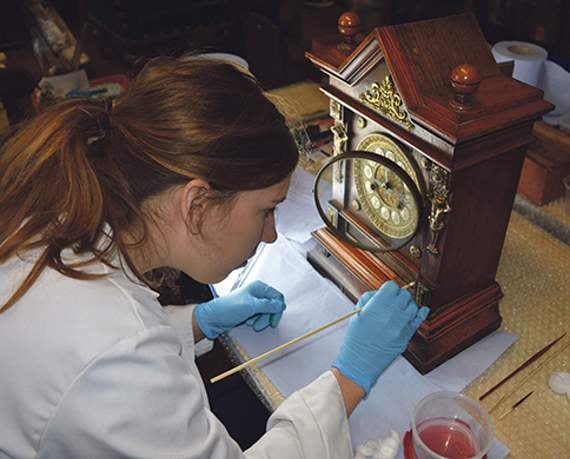
IMPORTANT conservation work is currently taking place not only on the Shire Hall building but also on the objects within the Brecknock Museum collection, all in preparation for the move to the redeveloped galleries.
“So far approximately 200 social history objects have been conserved,” explained senior curator Nigel Blackamore, “this work includes specialist cleaning and – where necessary – repair.”
“This is all part of the advance planning for our move to Y Gaer next year,” Nigel continued. “We’ll have state-of-the-art facilities, and we need our objects to be in the best possible condition too. This is our opportunity to assess and address conservation issues”.
The work is being carried out by experienced conservator Cath Lloyd Haslam.


“Cath is being assisted by three students from Cardiff University’s highly regarded Masters course in Conservation Practice, “ said Nigel, “This gives valuable practical experience to the students, working alongside an Institute of Conservation accredited conservator.”
Student Sarah James has been treating a range of objects. “This is fascinating work,” she enthused. “I’m putting into practice all the techniques I’ve learned, and have the satisfaction of knowing I’m really making a difference to the unique objects in the collection.”
One of the most interesting objects Sarah has conserved is a clock connected with a well-known incident in Brecon’s history. Five-year-old Tommy Jones went missing in the Beacons in August 1900.
A reward was offered to locate Tommy and after his body was found the money was used to buy this clock in his memory. “We have completed surface cleaning of the clock, and improvements to a previous repair,’ said Sarah, “It’s a privilege to have restored this iconic piece to the best possible condition.”
Furniture has been a particular focus of the conservation work. “There are different levels of cleaning for different objects. Those going back in store are surface cleaned, removing surface dust, grease, and polish residue,” explained Cath. “Pieces of furniture going on display have also been treated with “British Museum” furniture cleaner. This includes linseed oil, which feeds the wood as well as cleaning it.”
Some items have required repairs, for example a stick chair has had a leg stabilised, agricultural implements have had invisible repairs done on their handles, and a pushchair from Treberfydd house, dating from about 1900, has had its leatherette relined with Japanese tissue (a thin, strong paper made from vegetable fibres).
Rag rugs have been rolled (rather than folded) and protected with acid-free tissue paper for safe storage.
This conservation project is fully funded by a grant from the Welsh Federation of Museums and Galleries, through the Welsh Government, and a further grant will be sought to continue this valuable work.
“It’s all about adding value to the bigger Y Gaer project, and doing it well in advance of the move,” concluded Nigel. “It helps open up the collection, improve access, and enhance people’s appreciation of the objects.”
Readers can see more pictures of the conservators in action
on Brecknock Museum’s Facebook and Twitter accounts @BrecknockMuseum.