

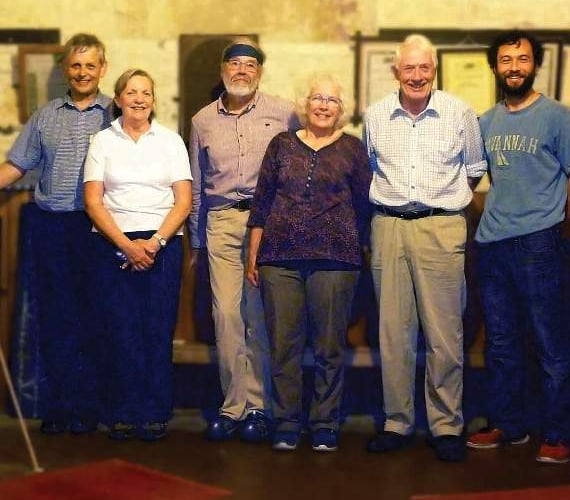
A SUCCESSFUL quarter peal of 1,260 changes, lasting 40 minutes, was rung on the six bells at St Gwendoline’s Church, Talgarth, on the evening of Thursday, August 31. It marked the arrival that day of eight newly cast bells at St George’s Memorial Church in Ypres (or Ieper) in Belgium.




In honour of six serviceman ringers who lost their lives in WWI, the Swansea & Brecon Diocesan Guild of Bellringers pledged financial support to this project at one of its meetings held last year in Talgarth. One soldier was from Clyro, three from Glasbury and two from Knighton.At the times of their deaths, the Church in Wales had not separated from the Church of England, so they were then regarded as ‘Hereford Diocesan’ ringers.
The names and details of the six ringers in the order that they fell are: Gunner Francis Henry Anthony, Royal Garrison Artillery (144th Siege Battery), who died on September 12 1917, age 34, and is buried in Bard Cottage Cemetery. He rang at Clyro; Private Frank Griffiths Dyke, Manchester Regiment (1st/7th Battalion), who died on October 20 1918, aged 19, and is remembered on the Memorial at Vis-en-Artois. He rang at Knighton; Private William Austin Hamer, South Wales Borderers (1st Battalion), who died on December 4 1918, aged 19, and is buried in Charmes Military Cemetery, Essegney. He rang at Glasbury; Pioneer William Albert James, Royal Engineers (34th Division Signal Company), who died on November 24 1918, aged 28, and is buried in Tourgeville Military Cemetery. He rang at Glasbury; Private William Rhys Jones, King’s Shropshire Light Infantry (7th Battalion), who died on June 20 1918, aged 18, and is buried in Sandpits British Cemetery, Fouquereuil. He rang at Glasbury; Lance Corporal Hector Philip Seabourne, London Regiment (23rd Battalion), who died on February 2 1919, aged 23, and is buried in Knighton Cemetery. He rang at Knighton.
The names of the ringers at Talgarth on August 31 are: Lloyd Evans (who conducted the quarter peal), Anne Kleiser, David Katz, Alison Alcock, Colin Lewis and Hal Drysdale.?
The tower at St George’s, opened in 1929, was planned to house a peal of English change ringing bells (hung for movement through more than a ‘full-circle’) but funds were insufficient. The ‘bells4stgeorge project’ therefore completes the original intention. This sort of installation will be unique in Belgium and extremely rare within the European mainland. The new bells were cast by John Taylor & Co of Loughborough; the heaviest of them, known as the tenor, weighs 6cwt (just over 300kg). Travelling on WWI Dennis and Thornycroft lorries, they were present at the Menin Gate Last Post Ceremony on August 30 and arrived in St George’s Church on August 31.