
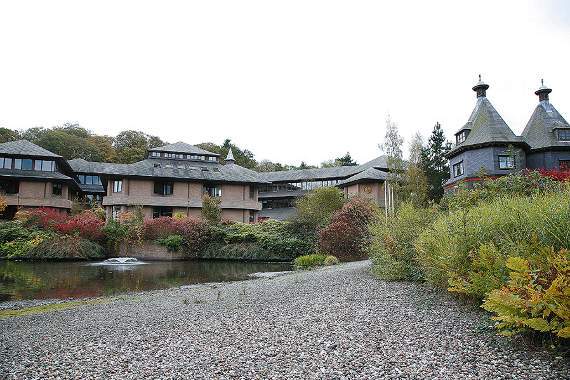
A POLITICAL row has broken out over Powys County Council facing the biggest funding cut of all Welsh local authorities.
The Welsh Government is slashing the settlement it awards Powys council by 4.1% from April - meaning its largest funding pool will reduce from £175 million to £168m.
It is the fourth successive year the local authority’s budget has been cut by more than 4% and the council has said increased demand for services and inflation will add to the strain of a £7m cut.
In contrast the biggest council in Wales, Cardiff will only see its budget cut by 0.1%.

The Conservatives have accused the Welsh Government of unfairly penalising rural Wales and called on Brecon and Radnorshire AM Kirsty Williams to vote against the Labour administration’s budget when it comes before the Assembly next year.
The Welsh Government is only expected to get its budget through the Assembly if Ms Williams’ five strong Liberal Democrat group abstain - meaning the combined votes of the Conservatives and Plaid Cymru wouldn’t be enough to block it.
Ms Williams has said she will not bring down the Welsh Government budget.
Gary Price, who is a Conservative member of Powys council representing Llandrindod North, will challenge Ms Williams for her Brecon and Radnorshire seat at next year’s Welsh Assembly elections.
He said: "I challenge the Welsh Liberal Democrats, led by Kirsty Williams, to come out fighting for rural mid Wales and vote against this budget. If they side with the government again, or just sit on their hands and abstain, they are allowing a clear passage for this anti-countryside budget to be approved.
"This propping up of a pro-city government simply cannot go on. For nine years in a row now, Powys has received the worst settlement. In the last three years alone we have seen a cut of £22m."
The council has warned services other than education and social care could be ’wiped out’ as it struggles to make savings in non essential areas such as libraries and highways.
Conservative Mr Price added: "Further cuts mean further reductions to vital services and the question is where the axe will have to fall? Will we be looking at three weekly bin collections, library closures and small village schools having no option but to shut their doors? Then, of course, there is the matter of the ever increasing council tax bills."
Ms Williams has however insisted she will not vote against the budget. She said: "To vote against the budget and bring the budget down would also mean we would lose money for the refurbishment of Llandrindod Hospital, the replacement of the Dyfi Bridge (at Machynlleth), additional money for joint working of health and social services as well as an additional £300m for the NHS and additional money for the poorest school children in Powys."
The Welsh Liberal Democrat leader said the funding formula used to allocate money to Welsh councils is separate to the Welsh Government’s budget and said as the settlement is still in ’draft form’ there is still time to influence it.
She added: "I’m in discussions with the finance minister about what can be done between now and the publication of the final local government budget to see what can be done to improve the settlement to Powys. I will also be meeting with the council leader."
Ms Williams also criticised the government for failing to set a minimum funding floor for councils, but it has said it decided against a floor as the overall reduction in local government funding is 1.4% rather than the 3.4% cut councils received last year.
Councillor Wynne Jones, Powys council's cabinet member for finance, said the funding formula disadvantages Powys due to low numbers of people on benefits, a small number of children who receive free school meals and high numbers in employment.
He said though the council had been braced for a 5% cut - it is disadvantaged as the government has instructed it to spend additional money on school and adult social care, where it planned to make big cuts through working closer together with the Powys health board.
A spokeswoman for the Welsh Government said its funding formula is agreed every year in partnership with local councils and all councils and independent members ensure there is no evidence of bias either in favour of, or against, the interests of any individual local authority.
She said local councils have flexibility in how to use the additional money for schools and social care.
Welsh Labour finance minister Jane Hutt has previously told Assembly Members the Welsh Government has faced a 3.6% cut in UK government funding over five years when the effects of inflation are taken into account.
Comments
This article has no comments yet. Be the first to leave a comment.