

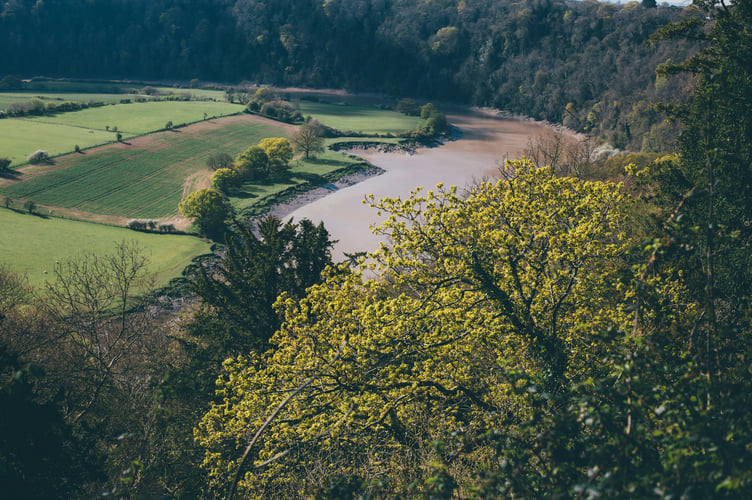
A six-point charter that recognises the need to “protect and restore” the environmental health of the River Wye could be adopted by Powys County Council next week.
At a meeting of the council’s Liberal Democrat/Labour cabinet on Tuesday, May 19, senior councillors will be asked to “endorse and adopt” a charter for the River Wye and its tributaries.
The report by head of economy and climate Daniel Burgess said: “The River Wye and tributaries have been nationally recognised for their ecological and cultural significance, with sections gaining legally protected designations, including as a Special Area of Conservation (SAC) and Site of Special Scientific Interest (SSSI), thanks to the presence of indicator species, including salmon and water crowfoot.
“The river is also the central feature of the Wye Valley National Landscape.



“However, the features that make the catchment special are in unfavourable condition due to multiple complex factors, including climate change, flow, excessive nutrients, known and emerging pollutants, and non-native invasive species.”
A motion to adopt the charter was brought to a meeting of neighbouring Herefordshire Council in December last year and supported by councillors.
The charter was later rubber-stamped by Herefordshire Council’s cabinet in March.
Mr Burgess continued: “The charter has been developed collaboratively by the Wye Catchment Nutrient Management Board and the River Wye Catchment Partnership, with input from legal and environmental experts.”
Councillors will be asked to agree to the charter, which states:
1 – The Right to Flow and Perform Natural Functions To maintain its natural course and seasonal rhythms without obstructions or extractions that detrimentally affect the ecological function of any part of the river system.
2 – The Right to Biodiversity To good biological health through the existence of balanced, diverse, and viable populations of native species and habitats specific to the Wye and its tributaries.
3 – The Right to Be Free From Pollution To exist in a state of ecological health and not be subject to detrimental levels of known and emerging pollutants that adversely affect the life of the river.
4 – The Right to Be Supported by a Healthy Catchment To flow through environments which support the river as a balanced, sustainable, and resilient aquatic ecosystem.
5 – The Right to Regenerate To recover to full ecological function through natural processes and for this to be supported by intervention, where necessary, to halt the decline in biodiversity and abundance and to increase both over time.
6 – The Right to Representation To be represented and have these intrinsic rights recognised in the determination of matters that directly affect the river’s health now and in the future.
Last month, a first hearing for the Rivers Wye, Lugg and Usk pollution claim took place at the High Court in London to decide how the proceedings will be managed.
It has been brought against poultry companies Avara and Freemans of Newent, as well as Welsh Water, and alleges that pollution has been caused by water run-off from farmland containing high levels of phosphorus, nitrogen and bacteria from poultry manure spread on the land as fertiliser.
It also alleges bacteria and nutrient pollution in the rivers has been caused by the discharge of sewage directly into the rivers from Welsh Water sewerage systems.
Comments
We've recently changed our login process. If you have an account for commenting, you will need to re-register on the login window.
This article has no comments yet. Be the first to leave a comment.