
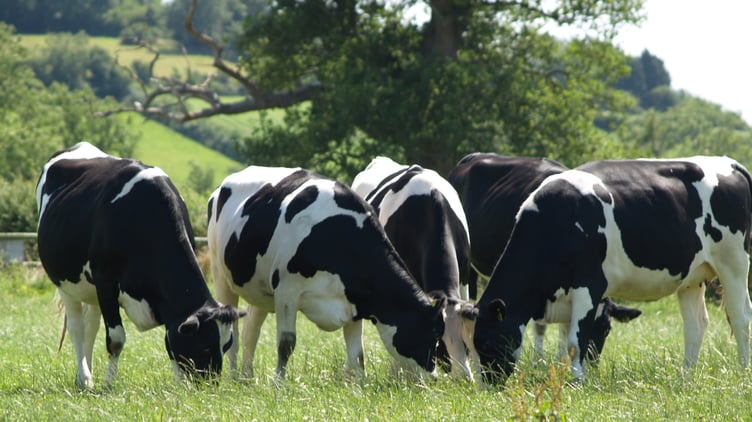
The Welsh Government has announced a new approach to tackling bovine tuberculosis in Wales, admitting the country is unlikely to meet its target of becoming officially TB-free by 2041 under current measures.
Cabinet Minister for Rural Resilience and Sustainability Llyr Gruffydd confirmed the Government would take an “evidence-based and science-led” approach, focusing on cattle, people and wildlife.
The announcement follows advice from the Bovine TB Eradication Programme Board and Technical Advisory Group. While ministers have ruled out a mass, non-selective cull of badgers, targeted intervention in wildlife remains an option where evidence shows it is needed.
The announcement has been welcomed by farming unions, although they have called for action to follow quickly, particularly over the role of wildlife in spreading the disease.
James Evans, Reform MS for Brycheiniog Tawe Nedd, challenged the pace of the plans in the Senedd, warning that farming families across Powys and Wales could face years more uncertainty.
Mr Gruffydd said nearly 96 per cent of herds in Wales were now TB-free. However, he said the country was unlikely to achieve officially TB-free status by 2041 if progress continued at its current rate.
He said: "The status quo is not an option.
"That's why we are taking a new and pragmatic approach to eradicating bovine TB. We will not stand by while farmers face uncertainty and anxiety, nor will we pursue a mass non-selective cull.
"Instead, we will be taking evidence-based and science-led action, incorporating the three pillars of cattle, people and wildlife. Where there is evidence of infection threatening farmers' herds and consequently their livelihoods, we will intervene."
The minister said work would start now, while further work was carried out in parallel.



“Farmers and the public will rightly judge us on whether we prevent disease, and reduce its impact, even when the decisions are difficult,” he said.
“Progress will depend on partnership and sustained effort and action by all, towards the common goal we all share of a TB-free Wales.”
Farming unions welcome new approach
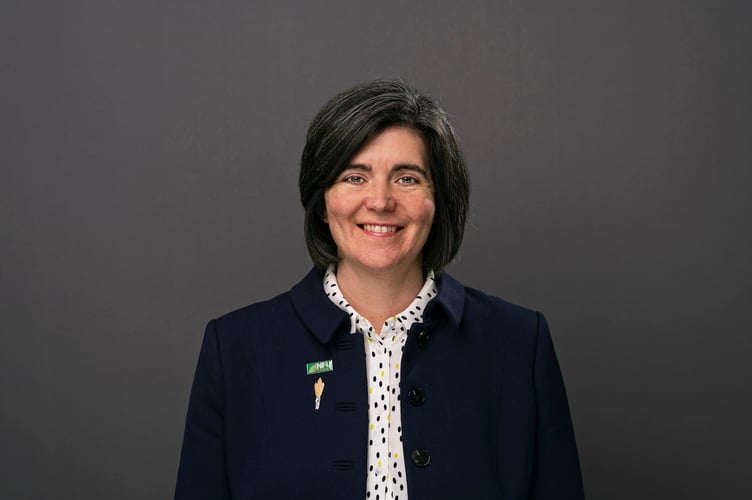
NFU Cymru president Abi Reader said the announcement marked important progress towards the change in policy called for by the Bovine TB Eradication Programme Board.
She welcomed the recognition that the disease needed to be addressed across all three populations, but said farmers needed reassurance that meaningful action would follow without delay.
"For the hundreds of farming families who deal with the impacts of this dreadful disease on a daily basis and the thousands more who are fearful of their next TB test, a truly holistic approach to TB eradication cannot come soon enough," she said.
“Bovine TB continues to limit the productive capacity of our livestock sector, inflicting emotional and financial scars on the farming industry across Wales, and whilst today’s announcement offers some glimmers of hope of a different route forward, it doesn’t offer immediate ease to the suffering of our members.”
She also welcomed proposals for a new approach to herds operating under enhanced management. Many are persistent breakdown herds which have been under restrictions for 18 months, placing a heavy strain on the farm business.
The announcement also touches on other recommendations made by the NFU Cymru TB Focus Group, including exploring the use of sensitive auxiliary tests, better use of testing data and a wider review of the testing regime to establish whether the right test is being used at the right time.
NFU Cymru warned that more sensitive testing could identify additional reactors and result in more farms being placed under restrictions. It said work on biosecure routes for cattle must therefore be accelerated, giving farmers a profitable way to get animals to market while limiting disease transmission.
The Farmers' Union of Wales also welcomed the announcement, describing it as an overdue shift away from what it called a one-dimensional, cattle-only approach.
The union said the scale of the problem was clear from the figures. During the 10 years to 2025, 22.3 million bovine TB tests were carried out in Wales and more than 92,000 cattle were slaughtered.
FUW president Ian Rickman said: "We welcome the Welsh Government's shift in narrative on Bovine TB eradication in Wales. The need for this holistic approach is clearly justified by the suggestion that the current target to be Officially TB Free by 2041 is currently out of reach.
"The announcement today demonstrates the need for such a crucial policy to be driven by evidence and backed by science, not by political agenda."
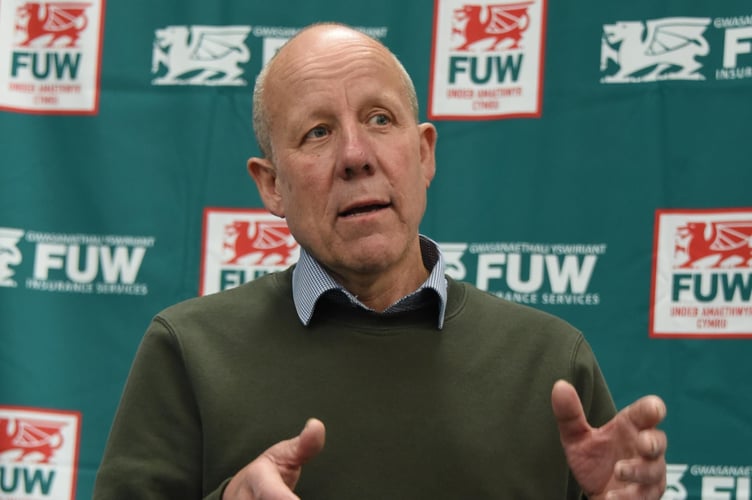
Mr Rickman said the union had consistently called for wildlife interventions to be considered as part of the eradication strategy. He called for closer working between farmers, vets, academics and Government to deliver the recommendations without delay.
Countryside Alliance Wales praised the new approach, describing it as "common sense".
Rachel Evans, director of Countryside Alliance Wales, said: "This approach is basic common sense, and we welcome it. We must protect our farmers and their cattle, and that means following the evidence wherever it leads, taking whatever steps it shows are necessary to eradicate this devastating disease."
Calls for faster action
James Evans said the Government's approach risked leaving farmers waiting too long for action on wildlife.
Speaking in the Senedd this week, he questioned why further surveys and reviews were needed before targeted intervention could take place.
Mr Evans also highlighted the human cost of the disease, saying farming families' livelihoods, businesses and mental health were being severely affected.
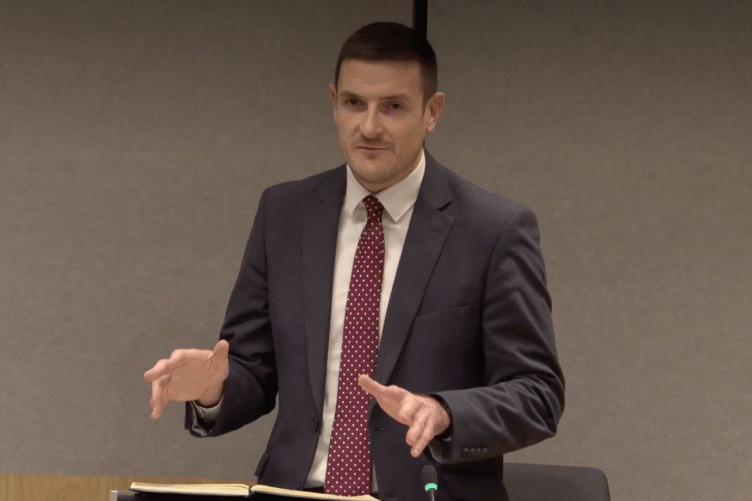
"There are a number of farmers across Wales who have taken their own lives because of the actions that previous Governments have not taken to address bovine TB," he told the Senedd.
"So, we can never forget the people we've lost because of this terrible disease."
Minister refuses to set timetable
Responding, Mr Gruffydd acknowledged the distress caused by bovine TB and said he knew people who had struggled with its effects, including people who had taken their own lives.
Mr Gruffydd said this strengthened his resolve to act, but added that the Government had to get its decisions right.
"We will be bold, we will be brave and we will do what needs doing where the evidence shows us that that is the right approach," he said.
However, he declined to give a firm timetable for targeted intervention.
"I'm not going to get tied down with dates, as much as you'd want me to say, 'This week, next week, in six months' time', or whatever, because the picture varies," he said.
"But what I can tell you is that much of the work is already under way. It's already under way, and my ambition is that it happens as soon as is possible.”
Speaking after the session, Mr Evans said: “I do not question the Cabinet Minister’s commitment to tackling bovine TB, but I do question the pace of delivery we are currently seeing. We have years of evidence gathered through badger surveillance, the Animal and Plant Health Agency and our veterinary professionals, yet we still do not have a clear timetable for a targeted intervention in wildlife.
“Where the scientific evidence supports targeted intervention in wildlife, the Welsh Government must be bold enough to act and fast. Our farming communities have waited long enough, and they cannot afford to spend another few years waiting for further surveys, reviews and reports before meaningful action is taken.”
Comments
We've recently changed our login process. If you have an account for commenting, you will need to re-register on the login window.
This article has no comments yet. Be the first to leave a comment.