

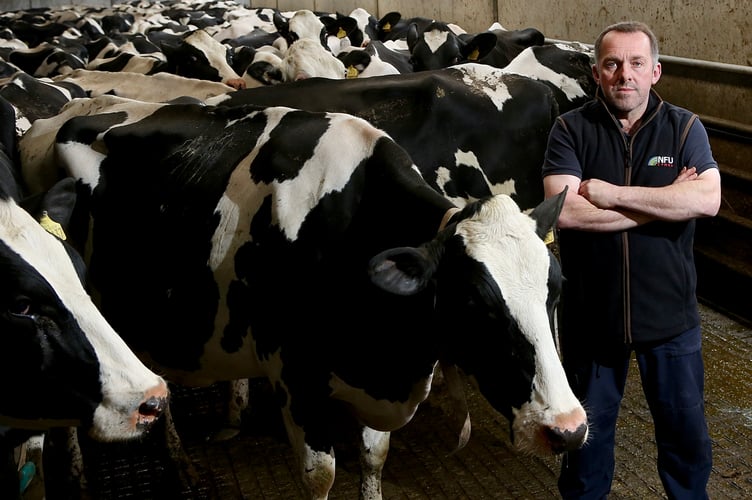
Farmers are calling on the next Welsh Government to take “drastic” action on bovine tuberculosis, warning that the future of the industry is at stake.
NFU Cymru says urgent changes to current policy are needed to give young farmers hope of building a career without the constant threat of the disease.
The warning comes as the union steps up its campaign ahead of the Senedd elections, releasing a series of videos as part of its “Growing Together” manifesto. The clips feature farmers from across Wales highlighting the issues they want politicians to address.
In the latest video, NFU Cymru Bovine TB Focus Group Chair Roger Lewis speaks about the impact the disease is having on farms and rural families.


Roger, whose own herd has been affected, said: “Over 11,000 cattle were slaughtered in Wales over the last calendar year due to bovine TB - a truly shocking statistic. Behind these figures lies the anguish experienced by farming families across Wales who deal with this disease, or the threat of this disease, on a daily basis.
“This disease places a huge strain on our Welsh farming industry. We cannot continue slaughtering thousands of cattle each year, whilst leaving the disease in wildlife unaddressed. There is clear evidence of a link between bovine TB in wildlife and cattle.
“The next Welsh Government should adopt a targeted approach - one which deploys the right intervention, whether that be culling or vaccination, in the right way and at the right time. We must be guided by the local disease picture on the ground and tackle the disease wherever it exists.
“Good on farm biosecurity remains crucial to protect our herds which are currently TB free. In addition, the stringent cattle control and testing regime will continue to play an incredibly important role in controlling this disease.
“If the next generation are to have any hope of farming in Wales without TB, then something needs to change. We urge the next Welsh Government to implement a comprehensive TB eradication strategy which actively tackles the disease in all its vectors.”
Bovine TB is a notifiable infectious disease of cattle, primarily affecting the lungs, and caused by the bacterium Mycobacterium bovis. It can also infect other animals, including badgers, deer, goats and pigs, and in rare cases can be passed to humans.
The disease spreads through close contact between infected and healthy animals, as well as via contaminated milk, slurry and other farm materials. Although clinical signs such as chronic coughing, mastitis and weight loss can occur, they are rarely seen due to routine testing designed to detect the disease early.
There is no effective treatment for infected cattle, meaning animals must be slaughtered to prevent further spread. Regular testing, milk pasteurisation and abattoir inspections help reduce risks.
A national eradication programme is in place, but the involvement of wildlife reservoirs makes the disease particularly difficult to control. Farmers and vets are required to report suspected cases to the Animal and Plant Health Agency, which investigates and oversees disease control measures.
Comments
We've recently changed our login process. If you have an account for commenting, you will need to re-register on the login window.
This article has no comments yet. Be the first to leave a comment.