
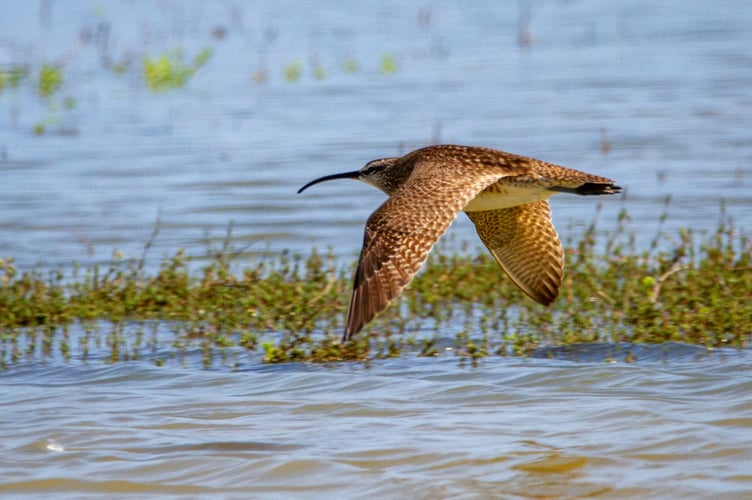
The iconic curlew is disappearing from the British countryside, warns new research, writes Mark Waghorn.
Europe’s largest wading bird could be wiped out by farming practices, predators and loss of habitat, say scientists.
It is the most urgent conservation priority in the UK due to a huge drop in chicks being born.
An estimated 58,000 pairs breed in Britain - about a quarter of the global population. The Brecon Beacons National Park is the most southernly point in the UK where this iconic species breeds and the area plays a vital part in the species’ recovery. The winter numbers increase slightly to around 120,000 individuals, owing to an influx from the continent.


Most are found in estuarine habitats. They have been in decline for more than two decades.
Lead author Ian Woodward, of the British Trust for Ornithology (BTO), said: “Whilst we would expect to see an increase in curlew numbers, or at least stability, as a result of milder winters, numbers are falling due to the decline in the breeding populations and factors operating during the summer months.
“Although conservation action therefore needs to be targeted at the breeding population, protection of wintering sites will still be important, ensuring the curlew does not face added pressures during winter months.”
Curlews have a distinctive tweezer like bill. They are deeply loved for a hauntingly evocative cry. It is now seldom heard.
Numbers have been in long-term decline since the 1970s and have almost halved in the UK over the past 20 years.
They have been introduced on the Queen’s Sandringham Estate in Norfolk - where she celebrated her 96th birthday today.
The rescue bid followed Curlew Recovery Summits hosted by the Prince of Wales on Dartmoor and at Highgrove last year.
Prince Charles described the bird as ‘special’ and urged people to play their part in helping to save it for future generations.
Its wetland stomping grounds are vanishing and modern farming sees fields cut more regularly - so eggs get mown and destroyed.
Curlews are also at risk from opportunistic predators like foxes and crows who eat them when given the chance.
The BTO team looked at the impact of local factors such as disturbance from recreation uses, pollution and new developments on individual sites.
They also considered widespread issues like climate change, sea level rise and national policy changes.
Mr Woodward and colleagues say action may be needed across a much broader geographical scale.
He explained: “We also need to understand to what extent factors operating during the winter months influence the wider fortunes of UK curlew populations.
“If, for example, such factors only exert limited impact on curlew survival rates, and hence both wintering and breeding numbers, then the focus of conservation action should target the breeding grounds.”
The study found an increase in wintering numbers during the 1980s and early 1990s likely reflects a positive response to the cessation of hunting.
There was also a wider redistribution associated with milder winters across their European range.
Winter temperatures influenced annual abundance changes at the site level rather than having direct impacts on survival.
Factors operating during the breeding season are likely to be the main drivers of the current decline.
Mr Woodward added: “This should be where conservation efforts are focused.” “Whilst breeding productivity remains low, it is important that a strong network of wintering sites be maintained to ensure that winter survival remains high and to avoid any additional pressures on curlew populations.
“This will enable more time to implement policies and management actions focused on breeding populations, which may successfully reverse declines.”
Curlews feed on worms, shellfish and shrimps which they pinch up using their tweezer-like bill.
The birds are most commonly seen at Morecambe Bay, the Solway Firth, the Wash, and the Dee, Severn, Humber and Thames estuaries.
The findings are published in the journal Bird Study.
Comments
This article has no comments yet. Be the first to leave a comment.