
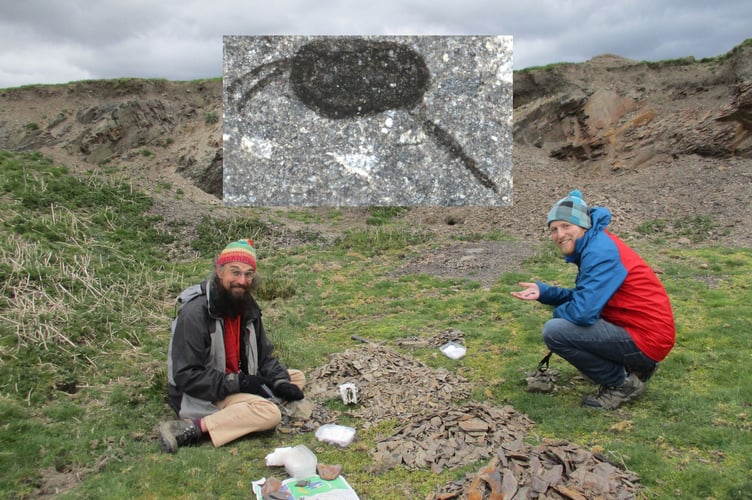
Meet Ffabach peryglus (affectionately known as the 'Danger Bean'): a remarkable new species of shrimp-like animal that lived near Llandrindod some 462 million years ago.
Its long, spiny front limbs would have been used to catch tiny prey... and yet the entire animal was only 1mm long! It was soft, delicate and almost impossible to fossilise. Ffabach is one of the latest array of new animals from the extraordinary Castle Bank fossil deposit near Llandrindod.
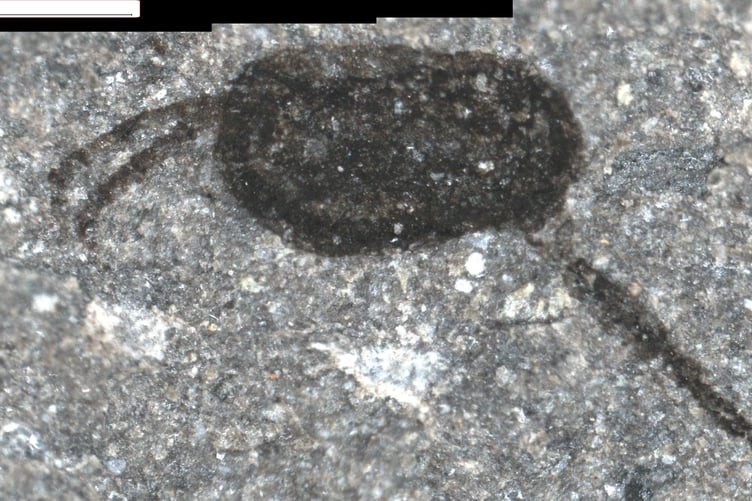
A new manuscript, published in the scientific journal Papers in Palaeontology, describes a wide range of species of what are called 'bivalved arthropods': shrimp-like animals with a carapace made of a pair of shells. These include tiny, hard-shelled ostracodes, the streamlined, pelagic caryocaridids and many other ancient species.
The paper was written by arthropod specialist Stephen Pates (University College London), with Llandrindod-based palaeontologists Joe Botting and Lucy Muir, and student volunteer Macy Campbell (University of Birmingham).
Another new species is Gloynia jonesi, named after a Welsh word for butterfly (for the open arrangement of the two shells); the name jonesi honours palaeontologist Clive R. Jones, who published a monograph on Welsh ostracodes in the 1980s. Gloynia was larger than Ffabach, at around 4mm long, and had a thin, hard shell.
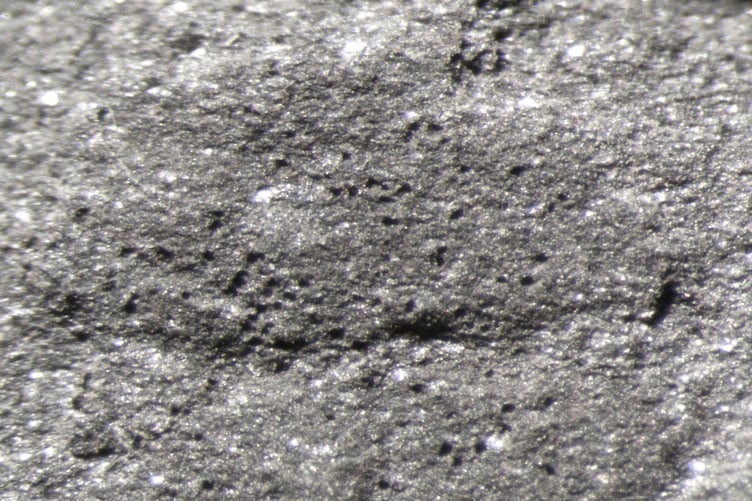
Joe Botting, who worked on the species, said: “Gloynia is fascinating. It is ostracode-like in its overall appearance, but is difficult to relate to any known group. Nothing quite like it has ever been described before.”
Other fossils are almost as surprising. Despite 300 years of research, the distinctive caryocaridids (which swam in the open seas) were previously unknown from the Llandrindod area. Two different types are recognised in this paper, based on three specimens.
The paper also includes a large number of not-yet-named species that are so far known only from the carapaces, without any details of their bodies or legs. New examples of bivalved arthropods are still being discovered regularly... but the paper showcases some of the remarkable diversity and preservation of the Castle Bank fauna. Many further papers are currently being written, as the diversity of this globally important fossil deposit is gradually revealed.

.jpeg?width=209&height=140&crop=209:145,smart&quality=75)


Dr Steve Pates, the lead author, writes: “A really exciting aspect of Castle Bank is its high diversity. With the bivalved arthropods we can distinguish species from one another by their carapace shapes or differences in soft tissues like feeding arms, and it's clear that this fauna is unusually diverse.”
“It's quite frustrating, really,” says Dr Botting, who discovered the exceptional fossil fauna and, with Lucy, is still collecting it.
“We keep finding more new things that should have been in this paper, but which will have to be published later. It's hard to keep up, but it's lovely to see these first species getting out into the world!”
The incredible geology of the Builth–Llandrindod Inlier, which records the history of a volcanic island complex and includes the Castle Bank site, is now recognised as the Heart of Wales Geopark to celebrate its rich geological heritage.
Comments
We've recently changed our login process. If you have an account for commenting, you will need to re-register on the login window.
This article has no comments yet. Be the first to leave a comment.