

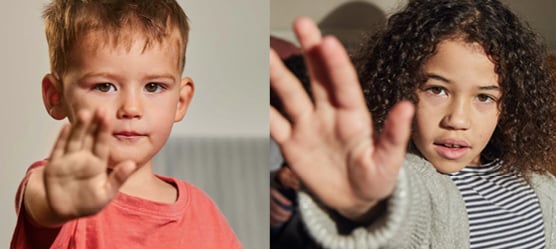
All physical punishment against children is now illegal in Wales as the law offers them the same level of protection as adults.
As of this today - Monday, March 21 - any form of physical punishment made against children will be illegal.
Physical punishment against children can include, but is not limited to, smacking, hitting, slapping and shaking.
According to the Welsh Government, research suggests that any type of physical punishment could be harmful to children.

-questioned-First-Minister-Eluned-Morgan-at-the-Senedd-about-health-checks-and-sup.png?width=209&height=140&crop=209:145,smart&quality=75)


A Welsh Government spokesperson said: “There is a big difference between discipline and physical punishment. Every child needs discipline – it’s about providing boundaries, guidance and support as they grow up and learn appropriate behaviour. But physical punishment should not be a feature of discipline.
“Physical punishment can have a lasting negative impact on a child, leading to fear, anger, sadness and confusion. The use of physical punishment also teaches children that violence is acceptable and is an appropriate response to strong feelings.”
Children now have the same level of protection under the law as adults from assaults. The law will also be clearer for children, parents and professionals and the public to understand.
Anybody who physically punishes children from today will be breaking the law and risks being arrested or charged with assault. They could also get a criminal record which is the same for any criminal offence.
The Welsh Government has said that there will be information, advice and support is going to be available for anyone who need it, to help them find positive ways to manage children’s behvaious and to help avoid such a situation ever happening.
A study conducted by the University College of London in June last year concluded that “physical punishment of children is not effective in improving children’s behaviour and instead increases behavioural difficulties, according to a landmark review led by UCL and an international team of experts who have analysed 20 years’ research on the topic.”
Across the world, two thirds (63 per cent) of children between the ages of 2 and 4, approximately 250 million children, are regularly subjected to physical punishment by their caregivers.
Lead author, Dr Anja Heilmann (UCL Department of Epidemiology and Public Health) said: “Physical punishment is ineffective and harmful and has no benefits for children and their families. This could not be clearer from the evidence we present.
“We see a definitive link between physical punishment and behavioural problems such as aggression and antisocial behaviour. Physical punishment consistently predicts increases in these types of behavioural difficulties. Even more worrying are findings that children who are the recipients of physical punishment are at increased risk of being subjected to more severe levels of violence.”
More than 60 other nation states across the world have already banned the physical punishment of children, in line with the United Nations Committee on the Rights of the Child.
Wales is the third part of the British Isles, after Jersey and Scotland in 2020, to make physical punishment illegal.
If you see a child being physically punished or if you are concerned about a child, contact you loal social services department of you can call the police or emergency services if a child is an immediate danger.
Comments
This article has no comments yet. Be the first to leave a comment.