

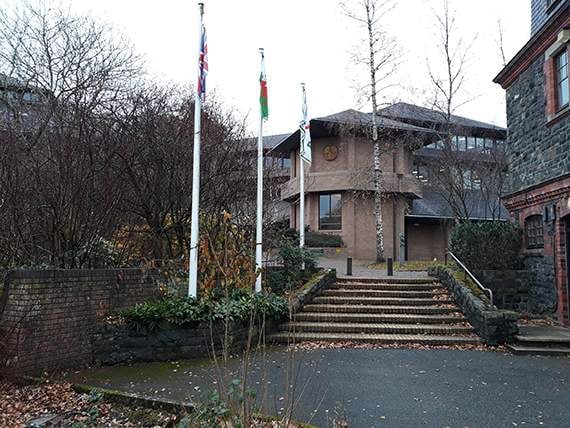
An inability to take unpopular decisions such as cutting services in the past is one reason Powys County Council is facing a £14 million financial meltdown, according to opposition group leaders.
The UK government is also being blamed as PCC need to find £41 million worth of cuts in the next three years.
The opposition group leaders have looked at draft budget proposals and believe the situation is getting beyond control.
Plaid Cymru group leader Cllr Elwyn Vaughan said: “I find the situation deeply concerning and is a reflection of the inability to take many necessary decisions years ago which have now compounded the situation.

.jpeg?width=209&height=140&crop=209:145,smart&quality=75)

“Added to this is the continuation of the crippling austerity agenda by the Westminster Government, despite the claims by Mrs May that austerity was at an end.”
Cllr Mathew Dorrance said: “If spending had kept pace with GDP, the Welsh Labour Government would have an extra £4 billion to invest but instead the Welsh budget has shrunk because of the decisions of the UK Conservative Government.
Cllr Dorrance said that the Welsh Government had made an extra £500 million for health and social care, £60 million for local council road refurbishment schemes and £31.5 million for next generation broadband.
Cllr Dorrance added: “I call on all councillors, regardless of political party, to work together to get Wales a fair settlement from Westminster.
“This can then be used to better fund local government in Wales using the formula council leaders have agreed with the Welsh Government.”
Liberal Democrat and Green group leader Cllr James Gibson- Watt said: “It is absolutely true that eight years of austerity imposed by the UK Government has presented really serious budget problems for all local authorities across the UK, including Powys.
“But the main cause of the reductions in funding from Welsh Government has been that Powys has a falling total population and, in particular, falling school pupil numbers over recent years.
“The local government funding formula is heavily based on population and school pupil numbers.
“Powys has also benefited from the recently-introduced rural weighting for social care provision and the funding ‘floor’ that strictly limits funding reductions to local authorities in Wales.
“While the council’s Cabinet may protest about grant funding levels it needs to face up to the fact that the costs of some of Powys’s major services are way out of line with those experienced by other rural Welsh authorities.
“Until that is addressed the council will not be able to stabilise its budget position, and although we hear much about ‘transformation’ from the Cabinet we have yet to see much taking place.”
Deputy Leader and Cabinet Member for Finance, Conservative Cllr Aled Davies, said: “After a decade of poor budgets we are having to work increasingly hard to identify areas where savings can be made.
“Officers are going through the same process hunting for more ways to raise income, change the way we deliver services to make savings and unfortunately in some areas reduce or close operations.
“We have to look at everything, the buildings we occupy, back office costs and staffing. .
“We must continue to deliver important statutory services such as education and social care however they absorb more than 70 per cent of our £247 million annual net budget but we must realise that these services will not be immune from reductions.”
The budget proposals include:
School budgets – these continue to experience financial pressures as a result of the teacher’s pay award and increased superannuation costs.
Job losses – at least 50 full time equivalent jobs are expected to go as most of our costs are ‘people’ related
Service reductions – Cuts in funding to planning, building control, environmental health services will reduce the capacity of services leading to delays in approvals and reduced frequency of inspections
Highways – the state of our extensive road network will deteriorate as maintenance budgets are reduced
Introducing or increasing charges for some public services (cemeteries, garden waste, car parking etc.)
Reductions and withdrawal of grant funding to external organisations
Continued disposal of council assets