
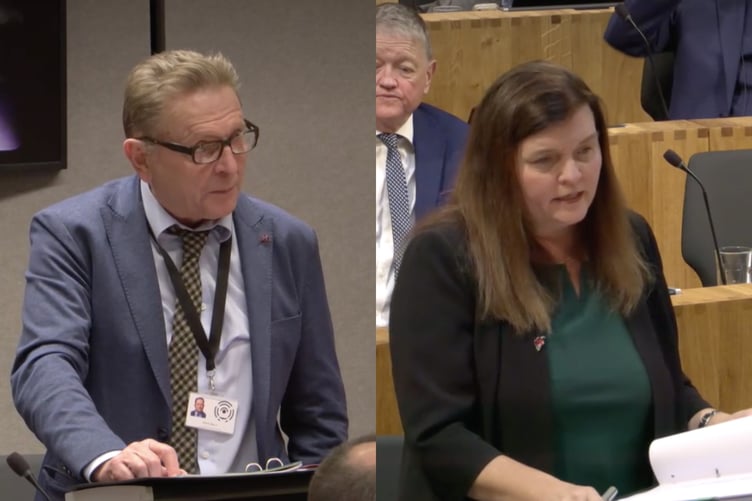
A local MS has questioned whether Welsh taxpayers should fund free school meals for secondary school pupils whose families are subject to immigration restrictions on accessing public funds.
David Mills, Reform MS for Brycheiniog Tawe Nedd, raised concerns about proposals to extend the provision during a Senedd debate on Wednesday, November 4.
The issue was raised by Plaid Cymru MS Zaynub Akbar, who said secondary school pupils affected by a No Recourse to Public Funds (NRPF) condition could not access free school meals in Wales, unlike in England.
She said free school meals were worth more than £500 per child each year and argued they were “one of the most effective ways to tackle child poverty and hunger”.
Calls to extend free school meals
“No child should go hungry because of their immigration status,” she told the Senedd.
Green Party MS Paul Rock also called for the provision to be extended, saying excluding some pupils was “a simple matter of fairness”.
Responding, Cabinet Secretary for Social Justice and Equality Sioned Williams said the Welsh Government recognised the pressures faced by families affected by NRPF and was considering what further support might be needed.
She said existing guidance reminded local authorities of their discretionary powers under the Education Act 1996 to provide free meals to children in these circumstances.
Reform MS raises concerns over cost




But Mr Mills said it would be “wholly inappropriate” for the Welsh Government to use Welsh taxpayers' money to extend state-funded benefits to families where the UK Government had deliberately restricted access to public funds.
He said: “A 'no recourse to public funds' determination is usually made for those who are in this country unlawfully, or those granted limited leave to remain, where they are required to support themselves and their families as a condition of their residency.”
He also argued that “parental responsibility must remain paramount” as children moved into secondary education, and questioned whether limited education funding should instead be focused on improving literacy, numeracy and classroom standards.
However, Ms Williams intervened to clarify that NRPF was a visa condition restricting access to certain benefits and housing support, and did not mean those affected were necessarily in the UK unlawfully.
“People on work or family visas can be affected. They're here legally,” she said.
She added: “If they have children and they're in a difficult situation, then I would hope that most Members of this Chamber would want for this Government to find a way to make sure that those children are able to avail themselves of a hot meal when they get to school.”
Ms Williams said officials were working with local authorities to understand the barriers and opportunities around providing support.
She added that the Cabinet Secretary for Education and the Welsh Language would meet the Bevan Foundation next month to discuss these issues.
Following the debate, Mr Mills said he remained opposed to extending free school meals to pupils affected by NRPF restrictions, arguing that Welsh taxpayers' money should not be used to “sidestep” rules imposed by the UK Government.
Comments
We've recently changed our login process. If you have an account for commenting, you will need to re-register on the login window.
This article has no comments yet. Be the first to leave a comment.