
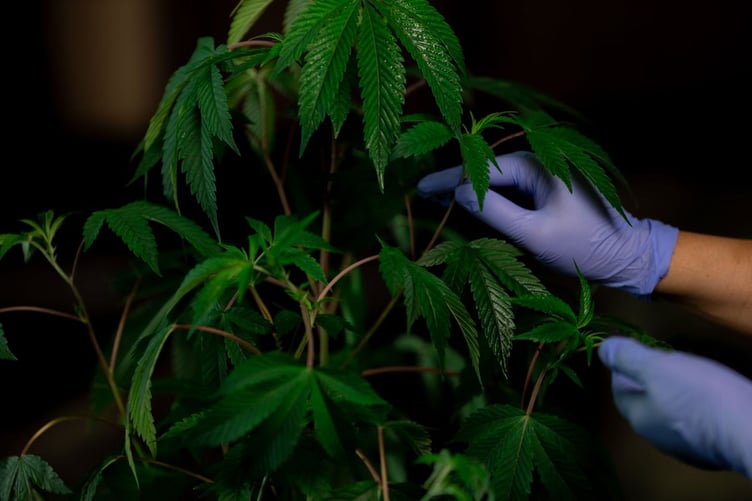
The UK has had legal medical cannabis for many years now. While the jury may still be out on some aspects of cannabis treatment overall, in 2018 the UK government found enough evidence to make it legal as a prescription medicine. Eight years later and some 80,000 people across the country are quietly treating their various conditions with legal medical cannabis.
Quietly being the word, because stigmas and misconceptions remain. If you search for the term cannabis on this site or elsewhere in Powys and the Brecon-Radnor region, you're more likely to see news of black market busts and illicit farms than you are positive articles about the potential emerging healthcare benefits of cannabis products. These, and issues of general healthcare access in parts of rural Wales, may be part of the reason Welsh patients have been slower to explore medical cannabis than other parts of the country.
Wales Only Has a Fraction of the UK's Medical Cannabis Patients
The UK prescription cannabis sector is growing fast. There are an estimated 80,000 actively prescribed patients in the UK at any one time as of 2026, and a single large clinic like Releaf serves some 180,000 registered users and 20,000 active monthly patients. Those numbers are up from essentially zero in 2018 when cannabis-based medicines were made legal for prescription.
Consider a guide to medical cannabis clinics in the UK as provided by a reputable name in the space as evidence of the scale of the market. Such a page demonstrates the growing level of competition and the range of offerings between different clinics, as well as the depth of information prospective patients want in a sector that is changing rapidly with new regulation and tech.
Yet, Wales lags slightly behind the rest of the UK. Wales makes up about 5% of the total UK population. Meanwhile, although data is difficult to compile, making estimates varied, somewhere around 3% to 4% of medical cannabis patients in the UK are Welsh.
That's despite relatively high levels of chronic pain among the Welsh population, an issue that has been discussed in the Senedd in recent years.
While scientific research on cannabis as a treatment for chronic pain is generally positive but often considered inconclusive, self-reported studies from UK patients have been very positive. In fact, medical cannabis for chronic pain is the most common prescription at such private clinics in the UK.
Yet, it must be noted that the National Health Service medicines regulator has not certified cannabis for GP prescriptions - chronic pain or otherwise. The National Institute for Health and Care Excellence (NICE) has only allowed cannabis medications to be prescribed on the NHS for severe cases of childhood epilepsy.
Therefore, despite it being completely legal for a qualified doctor to prescribe, prospective patients can currently basically only access legal medical cannabis through private clinics. In places like Powys, where many residents travel across the border into England for NHS treatment because of the lack of local options, awareness of and access to medical cannabis can be limited.
 Gear up for Christmas: Affordable seasonal hiring solutions for local businesses
 Frights and delights this spooky season with these incredible Halloween events
 Get Christmas Advertising wrapped up with our 13 week Business Accelerator Packages
  How to select the best meet-and-greet parking at every UK airport
Welsh Lib Dems Have Talked About the Issue
One issue in Wales in particular is that stigma and discrimination can be associated with medical cannabis use. Considering the ongoing police battle against black market supply, many people put medical cannabis patients in the same bucket.
However, a patient undergoing structured and monitored treatment plan with a certified dose of medical cannabis oil is very different from someone self-medicating by smoking black market cannabis. That difference is borne out by scientific results and in the opinion of governments around the world - including the UK.
In Wales, local governments have also recognised this. Member of Parliament for Brecon, Radnor and Cwm Tawe David Chadwick is a Welsh Liberal Democrat, and his party have actively supported and advocated for the rights of medical cannabis patients in the local region.
That is because misconceptions and stigma remain, which can stop people from adopting potentially life-changing treatment. While medical cannabis is not any kind of cure-all, it increasingly shown in studies to be a less harmful alternative to long-term opioid use for management of chronic pain, for example, with 92.2% of UK patients in one survey reporting improved quality of life.
Dyfed-Powys Police Have Adopted National Guidance
One concern many potential new medical cannabis patients have is regarding the law. Because medical cannabis can (although it should not be if stored in medical containers alongside a prescription) be very similar in appearance to black market cannabis, it is possible that legitimate medical cannabis patients can be stopped and searched by police.
However, the UK government and police forces are increasingly taking this issue seriously. With the medical cannabis business expanding in patient numbers and now worth tens of millions of pounds to the UK economy every year, patient rights is a topic getting more attention.
In 2026, police forces across England and Wales were issued with updated guidance on dealing with medical cannabis, including Dyfed-Powys Police. This included a new policy of verification over suspicion for those presenting as patients, until proven otherwise.
Comments
This article has no comments yet. Be the first to leave a comment.