
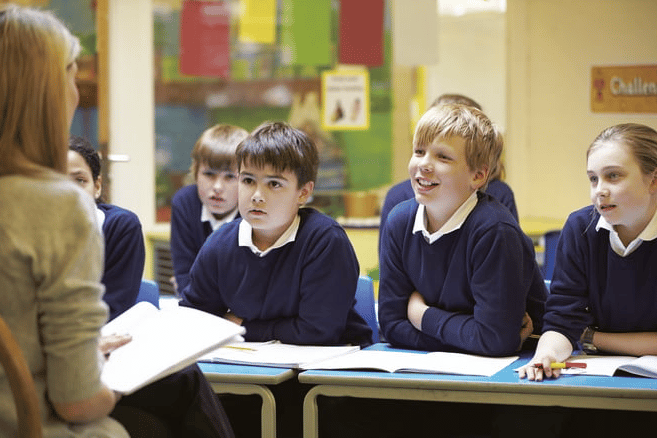
More primary schools can expect to be closed in Powys in the near future as a day of “reckoning” for the school estate is on the horizon.
At a Powys County Council meeting on Thursday, February 26, councillors met to debate the budget proposal for next year.
These include providing an extra £5.56 million for schools, with an extra £1.76 million going in to bolster the council’s Education department.
This means that next year schools’ share of the council’s budget of £390.541 million will be £103.872 million.
This is nearly £10 million more than the £93.9 million which was agreed in the 2025/2026 budget and comes on the back of a scathing report last year into the state of education in the county by national school inspectors, Estyn.
At a meeting at the end of January, the Learning and Skills scrutiny committee probed the draft budget proposals for schools.
While endorsing the extra funding, the committee raised concerns over the revised funding formula, which would see some schools lose out.
As the funding increase would be absorbed in teacher pay increases, pensions and inflationary issues, committee members were concerned that the money would not help improvement in the classroom or address historic budget deficits in schools.
Committee chairman, Cllr Gwynfor Thomas (Conservative – Llansantffraid), said: “The proposal of almost £104 million in schools is presented as investment but, in reality, it reflects a failure of strategic leadership that has allowed the Powys education system to deteriorate to the point where major emergency funding is unavoidable.
“The £10 million uplift is the direct consequence of the damning Estyn inspection that highlighted systematic weakness.




“Instead of celebrating the increase, we must recognise that cabinet is paying for the problems it failed to prevent and centres entirely on remedial action, strengthening leadership, accountability, targeted intervention, urgent site security works and attempts to repair a broken 16-19 model.
“These actions are only being taken after Estyn exposed persistent failings, suggesting the Cabinet did not fully monitor or address them over several years.”
He added that a consultation which saw only 17 of 80 schools take part showed that this “exceptionally low participation” demonstrated a lack of engagement and confidence in the process.
Cllr Thomas said: “The cabinet’s failure to secure broad input on major funding change undermines the legitimacy of the proposals and suggests a disconnect between decision-makers and school leaders – the formula changes create the risk of winners or losers.”
In the aftermath of the Estyn report, education portfolio holder Cllr Pete Roberts (Liberal Democrat – Llandrindod South) was moved sideways into another cabinet role, while former council leader Cllr James Gibson-Watt (Liberal Democrat – Glasbury) was given the education brief.
Cllr Gibson-Watt responded: “Some of the criticism is fair.
“The difficulties in the schools’ delegated budget are not a new phenomenon.
“I remember in the last council we had significant concerns about the build-up of secondary school deficits, which has continued to occur in this council.
“The balance of spending in our schools’ budget is skewed.
“While it continues to be skewed, we will face these problems – and if we are honest as councillors, we need to be clear about what our education system is for.”
He believed that the education system in Powys should “maximise” the learning potential of all pupils of all abilities in “every school” in the county.
Cllr Gibson-Watt pointed out that pupil attainment levels at primary school drop off in secondary school and, to address this, the school transformation programme needs to “speed up”.
Cllr Gibson-Watt said: “Some of that will be very difficult decisions and they will have to be made, or the situation will not be corrected.”
He pointed out that Social Services budgets had ballooned in recent years due to the county having more older people living in Powys, while the number of youngsters in schools was dropping.
Cllr Gibson-Watt said: “At some point the reckoning will have to be made and we’ll have to decide how much we can continue to afford to put onto the education budget and the schools’ estate as it is not sustainable.”
Later in the meeting, a majority of councillors voted for the budget.
Comments
We've recently changed our login process. If you have an account for commenting, you will need to re-register on the login window.
This article has no comments yet. Be the first to leave a comment.