
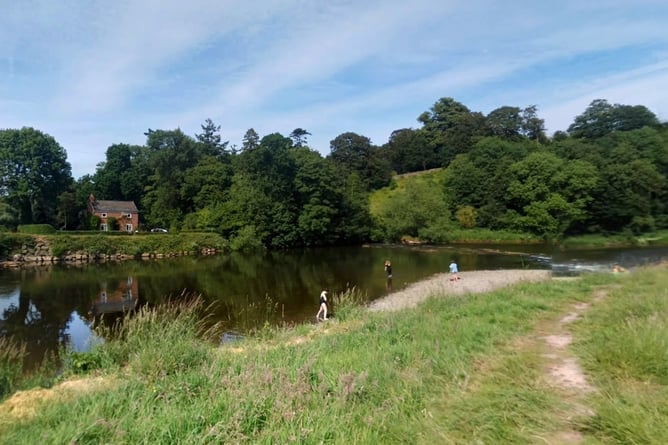
Citizen scientists say they have recorded their “highest ever” levels of E. coli at a popular Welsh bathing site, and have warned members of the public against swimming in the waterway, writes Robin Eveleigh.
Volunteers tested for the bacteria at The Warren, a shingle beach on the River Wye close to Hay-on-Wye, on Thursday, June 25, and found levels more than three times higher than those considered safe for bathing.
The analysis by the charity Friends of the River Wye (FOTRW) directly contradicts recently published data from the Welsh environment watchdog, Natural Resources Wales (NRW), which declared the water quality “excellent”.
FOTRW said its data has exposed a weakness in NRW’s reporting process, as the organisation publishes results up to 10 days after tests take place.



An NRW spokesperson said it welcomed additional information from community groups. It said: “We take all reports about water quality seriously and welcome the extra information this group has shared to help us better understand water quality at this popular bathing spot.
“We encourage the group to submit their findings through our incident reporting service, so we can log and investigate them properly.”
Eamon Bourke, communications lead for FOTRW, said: “It was absolutely heaving at The Warren on Thursday, but with this new test result, you absolutely shouldn’t go in.
“It’s totally counterintuitive because getting into the river offers such relief from the heat - but it’s not what you think it is.
“It’s not fresh water, it’s something else. You’re actually putting yourself - and especially young children - at harm. I won’t be sending my family in this weekend - definitely not.”
The Warren is popular with wild swimmers and families, and offers a mix of deep pools, shallow paddling and rapids.
It was granted official bathing status by the Welsh Government in 2024 following a campaign by FOTRW.
The designation compels NRW to test fortnightly for E. coli, as well as intestinal enterococci bacteria, both of which indicate faecal matter in the water.
Levels of E. coli below 500 colony forming units (CFU) per 100ml sample are considered “excellent” for inland bathing waters, according to the UK Environment Agency.
NRW recorded just 45 CFU for E. coli on 16 June but only published its results last week.
FOTRW began its own independent testing regime last summer with support from the environmental charity River Action, and is taking weekly samples with results available within 24 hours.
Thursday’s sample contained 3,088 E. coli CFU, FOTRW’s highest result to date. Levels below 900 CFU are considered “sufficient” for swimming.
Mr Bourke said: “NRW’s result came in for a week ago and said, ‘crystal clear, perfectly good.’ But we’ve just been down there, got our results the next morning, and they’re absolutely shocking - the worst we’ve ever seen.
“Clearly there’s a problem with the way NRW are delivering their results. People think they mean the river is clean. There’s a need for quicker results on water quality, and we’re filling that space.”
He stressed the source of the bacteria was unclear, but said: “It gets into the river due to poo getting into the river.
“That could mean run-off from fields that have been spread with digestate, septic tanks or some other source. It’s pure speculation because we simply don’t know.
“We’re used to seeing a pattern of unsafe E. coli levels after rainfall, but this is unusual because we haven’t had any rain. We’ve been discussing amongst ourselves and there’s a real sense that we need to get to the source of the Warren’s high E. coli.”
The River Wye stretches some 155 miles from its source in Mid Wales to the Severn Estuary.
Campaigners say the waterway is close to ecological collapse and blame a combination of agricultural pollution and sewage for its declining quality.
FOTRW has set up an online form for reporting illness after swimming in the Wye.
A previous episode of high E. coli in July 2024 - days after The Warren’s bathing status designation came into effect - prompted Powys County Council to issue a public health notice advising against swimming at the site.
E. coli (Escherichia coli) can cause illness ranging from bouts of diarrhoea to life-threatening complications such as kidney failure. Symptoms, which can include stomach cramps and fever, usually begin three to four days after infection and can last up to two weeks.
In a further statement on Saturday, NRW said its incident team had inspected the site and found no visible source of pollution.
John Clark, Duty Tactical Manager South East for Natural Resources Wales, said: “In recognition of community concerns following results from additional voluntary water quality testing at The Warren on the River Wye, our incident management team has today completed an inspection of the site and found no visible source of pollution.
“Our next bathing water inspection for the Warren will take place this coming week, as part of our schedule of sampling visits throughout the bathing water season.
"The Warren is a cherished community resource. It is one of only four freshwater inland bathing sites in Wales that are designated under the bathing waters regulations, with the remaining 110 regulated bathing waters on our coast.
“We service all regulated bathing waters in Wales with a minimum of eight water quality tests throughout the statutory bathing water season that runs from May 1 to September 30.
“We welcome reports from the public on environmental issues and we are keen to work with community groups to find the best way to combine information gathered by voluntary effort with our own data, so we can build a clear picture and take action to protect the environment.
"Reports can be made online or by calling our 24-hour incident line on 0300 065 3000, or by email to [email protected].”
Comments
We've recently changed our login process. If you have an account for commenting, you will need to re-register on the login window.
This article has no comments yet. Be the first to leave a comment.