
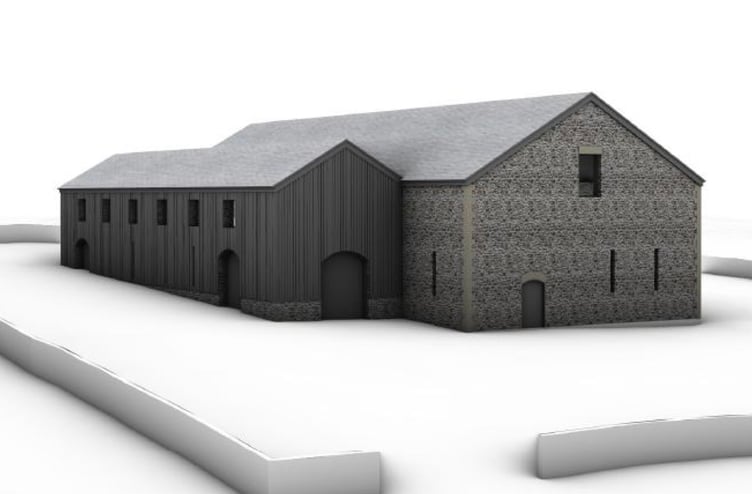
Plans to build more infrastructure at a water treatment works in the very southern tip of Powys, near Glynneath, have been given the go-ahead by national park authority members.
At a meeting of Bannau Brycheiniog National Park Authority’s (BBNPA) Planning Committee on Tuesday, November 3, a report on plans by Dŵr Cymru/Welsh Water for a new building at the Cefn Dryscoed Water Treatment Works at Pontneddfechan was discussed by members and councillors.
The building would be used to house three dissolved air flotation (DAF) tanks and the equipment needed to run them.
Documents lodged with the application explained that DAF tanks are needed to enhance the function of the water treatment works by “reducing manganese levels and increasing water quality at the front end of the treatment process”.
The building would measure 40 metres by 28 metres, with a roof pitch of 13.5 metres, at the facility, which provides drinking water for residents living in the Neath Valley communities.
Planning officer Ffion Bevan said the application had been brought before the committee as it was a “major” planning application in the open countryside and there had been one objection lodged against it.
Ms Bevan said: “We are satisfied that the work complies with policy and there is a degree of necessity to the proposal at this location, with exceptional circumstances to justify this particular location.
“There is no dedicated manganese removal process at Cefn Dryscoed at the moment and in 2022 there was a discolouration event caused by the elevated levels of manganese that led to customer complaints about the worsening water quality.”
She explained that the potential for elevated levels of manganese was due to the “raw water” that comes to Cefn Dryscoed from Ystradfellte Reservoir.
Ms Bevan told the committee that she recommended approving the application.


Cllr William Powell (Powys) said: “The report sets out the overall imperative for providing this facility.”
Welsh Government-appointed member Professor John Hunt said: “Are there consented discharges from this site and will this development have any impact on those?”
He also asked whether there would be an opportunity for people to visit and tour the site.
Ms Bevan said: “This is not wastewater, this is drinking water, so there are no discharges.
“In terms of education, there was nothing proposed.”
She explained that if educational visits had been proposed, there would have been a need to look at traffic impacts and air quality in more depth.
The committee went on to unanimously approve the application.
Comments
We've recently changed our login process. If you have an account for commenting, you will need to re-register on the login window.
This article has no comments yet. Be the first to leave a comment.