
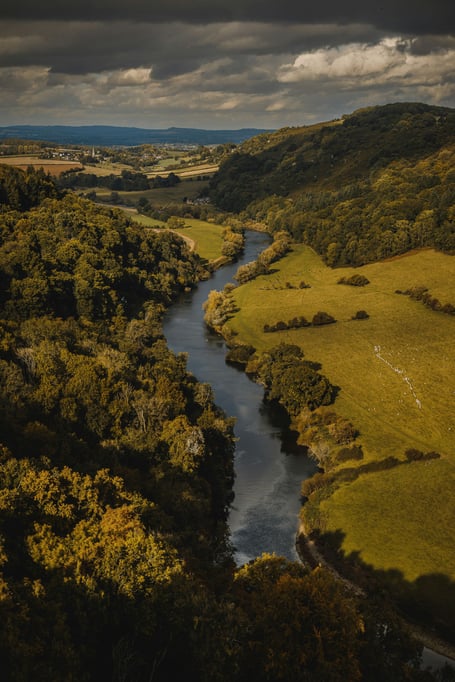
Citizen scientists in the catchment of the River Wye have now taken more than 50,000 water samples in an extraordinary show of people-power to monitor the health of an ailing river.
They’re calling on the government to match their commitment by acting on their data to restore the river to health.
More than 500 volunteers have contributed to this effort since 2020 to test the water quality of the River Wye and its surrounding rivers and streams.
This community effort monitors far more locations, more regularly, than the government agencies, providing a more granular view of the health of the Wye catchment.


.jpeg?width=209&height=140&crop=209:145,smart&quality=75)

Both the Environment Agency and Natural Resources Wales use the data collected by the volunteers, but the groups undertaking these tests want to see far more action from the government agencies to clean up the areas of concern and prevent ongoing pollution.
Anglers with the Wye Salmon Association took the first citizen science tests in the Wye catchment, inspiring a wider movement to develop. Since 2021, Friends of the River Wye and CPRE Herefordshire have also had armies of trained volunteers contributing to the project.
All data collected by the different groups is available to view on one ground-breaking data platform called WyeViz, created by a volunteer and trustee of Friends of the River Wye. This database has been viewed over 100,000 times.
It includes a leaderboard of shame which highlights the most polluted parts of the catchment at any one time.
With agricultural pollution the primary threat, the groups are concerned by low levels of compliance with environmental regulations and the lack of enforcement action against polluters.
Only 41 per cent of Welsh farms are compliant with environmental regulations, according to a Welsh Government report from March 2025.
In England, the Environment Agency said they carried out 183 farm inspections in the Wye during 2024/25, of which 78 received "enforcement responses" - all of which were either warning letters or site warnings. There were no penalties for breaches of environmental regulations.
Pat Stirling from Friends of the River Wye said: “This huge voluntary effort shows how much people love their local rivers and are willing to devote time to monitoring them. Our citizen scientists are the first line of defence for our rivers, alerting the authorities to pollution incidents and chronic problems. We have a league table showing the most polluted areas and we need to see improvements now. The agencies can’t just advise polluters to clean up their act, they need to make polluters pay to prevent pollution being profitable. At present, good farmers doing the right thing are penalised by the lack of a fair playing field”.
Andrew McRobb from CPRE Herefordshire said: “We started doing this monitoring because the agencies told us that they were lacking data. We’ve delivered data in spades and they need to act on it. Over five years of sterling work by volunteer citizen scientists has delivered evidence for the agencies and governments and led the way to the government funding a long overdue comprehensive Wye Catchment Plan. We can identify the problems, but only the government agencies can enforce the actions necessary to deliver real change.”
Stuart Smith from Wye Salmon Association said: “Our brilliant volunteers, along with those from the River Dore team, have shown amazing resilience over the last four years and we’re very proud of their efforts to provide data aimed at helping progress to improve water quality in the Wye catchment. We now need governmental bodies to raise their game and match that effort and commitment”.
So what the citizen science data show?
Nutrient pollution is a significant concern because it contributes to the risk of eutrophication, which in some years has brought about extreme algal blooms. In 2025, 28 per cent of samples were ‘poor’ or ‘very poor’ quality for phosphate, whilst 50 per cent had ‘very high’ levels of nitrate.
The proportion of samples rated ‘poor’ or ‘very poor’ quality for phosphate decreased by 7 per cent since 2022 (when this proportion was 35 per cent). This may partly reflect changes made within the farming community as a result of growing awareness about the problem of excessive phosphorus in the catchment. The largest poultry producer, Avara Foods, has said it is exporting the majority of its chicken manure out of the Wye catchment, though campaigners have asked for transparency about exactly where this manure is going. It could also be a result of Welsh Water’s investment in phosphate-stripping technology at sewage works.
It is difficult to draw conclusions about long-term trends in the data without further analysis because weather conditions vary, causing fluctuations in results. As the database grows to cover more years, we see how the nutrient levels respond to differing weather.
Whilst overall phosphate levels appear to have fallen, the proportion of samples rated ‘very high’ for nitrate has increased by 7.7 per cent in the same period since 2022 (when this proportion was 41.9 per cent).
Citizen scientists are also concerned by increases in turbidity. Turbidity measures the cloudiness of the water and a rise in turbidity indicates that more material is entering the water, often in the form of soil run-off. Sediment entering rivers can smother fish spawning grounds and is also a conduit for nutrient and chem ical pollution. The proportion of samples reporting high levels of turbidity increased by over a third from 2022 to 2025 (from 3.5 per cent of samples to 4.7 per cent of samples).
Comments
This article has no comments yet. Be the first to leave a comment.