

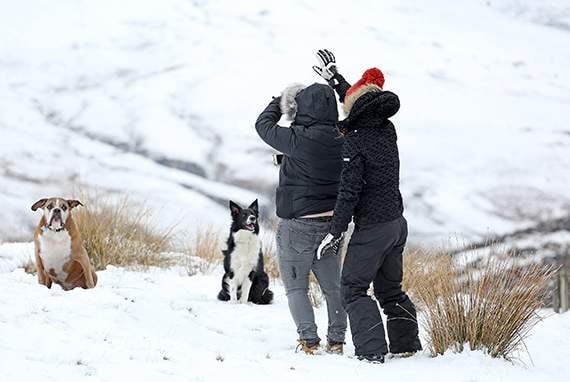
As the snow sweeps across Wales, natiowide vets practice Pets at Home wants to ensure animal lovers are fully educated on the dangers the cold could pose to their pets.
Dr Karlien Heyrman, Head of Pets for Pets at Home, said: “During colder periods, exposure to winter’s dry, cold air and chilly rain, sleet and snow as well as grit and salt can sore and irritated paws, but these aren’t the only discomforts pets can suffer.
“Winter walks can become downright dangerous, not only because of the risk of injury from slips and falls but also if chemicals from ice-melting agents are licked off bare paws.”
To help prevent the cold weather adversely affecting your pet’s health, Pets at Home have put together the following tips for pet owners:




Towel dry your pet as soon as they come inside – Repeatedly coming out of the cold into the dry heat of your home can cause itchy, flaking skin. Always towel dry your pooch, paying special attention to their feet and in-between their toes. Remove any snow balls from between their foot pads, these are very painful and cause irritated and infected skin.
Never shave your dog down to the skin in winter – A longer coat will provide more warmth. If your dog is long-haired, simply trim him to minimize the clinging ice balls, salt crystals and de-icing chemicals that can dry their skin. If your dog is short-haired, consider getting them a coat. Paws can be protected with appropriate dog booties.
Keep an eye on their waistline – during dark, cold and wet days your pet might not feel like going outside as much they do in summer (and neither might you!). This means you might need to reduce the amount food you feed over winter.
If it’s too cold for you, it’s probably too cold for your pet – If your pet is not used to living outside don’t leave them outdoors, pets can freeze, become disorientated, lost, stolen, injured or killed. Very young and older animals are particularly prone to the cold. Road traffic injuries are more common on short winter days so consider keeping your cat indoors when it’s dark. In addition to this, don’t leave pets alone in a car during cold weather as cars can act as refrigerators that hold in the cold and can quickly lower your pet’s temperature to dangerous levels.
Take extra caution when using anti-freeze – Ethylene glycol, a chemical usually found in antifreeze, is and potentially fatal when ingested by pets. Even small amounts can be fatally toxic to the body’s organs such as the kidneys. Its “sweet” taste makes it particularly appealing to cats who might mistake it for water or accidentally ingest it by grooming themselves. Therefore, take extra caution when using the chemical and ensure it doesn’t spill onto the ground from the car or is left uncapped after use.
Check your car, garages and sheds – cats love to curl in warm places for a nap. It’s therefore not uncommon for cats to accidentally get trapped in sheds and garages without food and water for days or weeks. Warm engines are also a cosy place to rest for outdoor cats – always check under your bonnet before driving off.
Extra bedding – provide plenty of extra bedding for pets kept outdoors such as rabbits. Prevent the base of enclosures from becoming damp or rotten by raising them off the ground if possible. Check bedding daily and replace if necessary, damp bedding will freeze easily.
Fresh water – check daily to make sure outdoor water supplies are not frozen.
The right spot – you might want to move your small furries to a shed, utility room or un-used garage when the chill hits. Never put pets in a garage that is used as the exhaust fumes can be toxic. Avoid greenhouses and conservatories where temperatures tend to fluctuate a lot. Never put your pets too close to radiators or heaters, especially if they can’t move away as some pets such as rabbits are prone to suffer from heat stress.
Cold-blooded care – cold weather means dry air which can leave reptiles dehydrated and prone to skin shedding problems. Some species might need misting or bathing to give them the moisture they need.
For more information on pet safety in the darker season or to view the latest reflective pet products by Pets at Home please visit www.petsathome.com