
What has the BBC ever done for you?
It is a question that comedian and joint Celebrity Traitors winner Romesh Ranganathan seems to have been asking for months.
And one very important answer to his question is that the BBC has provided funding for the Local Democracy Reporting Service (LDRS) since its inception in 2018.
This week, the News Media Association, an umbrella organisation that provides a voice for national, regional and local news media organisations in the UK, is holding its annual “Journalism Matters Campaign”.
The aim is to highlight how independent journalism is part of the country’s critical infrastructure.
As part of this campaign, LDRs have been asked to highlight the benefits of the service and its vital role in strengthening local accountability, with a “day of action” taking place on Wednesday, November 4.
For me, my day of action will be spent at a BLAENAU GWENT council meeting, where I will be watching and then writing up discussions by councillors on a number of topics.
As part of the campaign, I thought it would be good to explain what I do as an LDR.
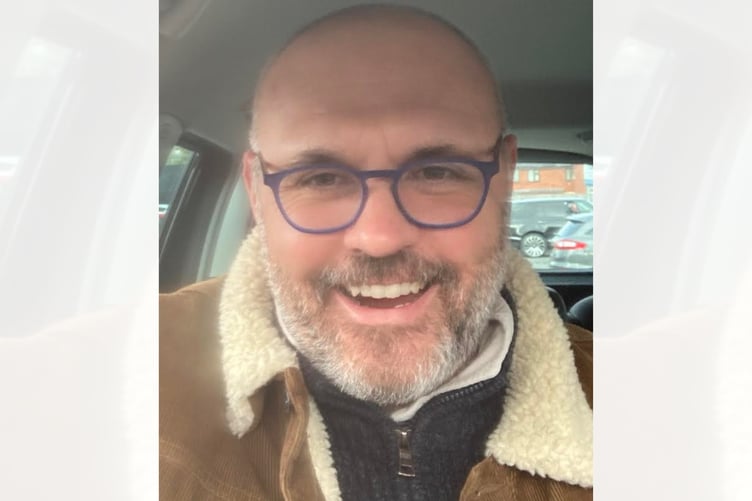
My name is Elgan Hearn and I have been a journalist since 2000 and part of the LDRS since 2018.
Over the years, I have been asked: what do I do for a living?


And when I say that I’m an LDR, I have to expand on that answer and explain that I’m a journalist who covers local government.
I have to explain that the LDRS is a partnership between the BBC and regional media, and that the journalists are funded by the BBC but employed by regional news organisations.
A total of 165 reporters are allocated to news organisations in England, Scotland, Wales and Northern Ireland.
LDRs cover top-tier local authorities, second-tier local authorities and other public service organisations.
In Wales, this means that I’m one of 11 LDRs covering 22 local authorities, as well as three national park authorities and seven local health boards that cover the country.
I cover Blaenau Gwent County Borough Council and Powys County Council, as well as Powys Teaching Health Board.
Since the summer of 2025, when my contract was awarded to the Brecon and Radnor Express, I have also covered Bannau Brycheiniog National Park Authority meetings.
This means having to juggle a lot of meetings, as watching and reporting on them is the central and most important part of my role.
It can be difficult at times, as both Powys and Blaenau Gwent councils are unitary authorities and essentially have the same number of council, scrutiny and regulatory meetings.
The awkward part is that these meetings clash. With health board and national park authority meetings on top, this means a lot of reading and research has to take place to decide which ones to cover and which ones to miss.
Personally, I probably suffer from FOMO (Fear of Missing Out), as I don’t really like missing meetings which could provide a huge scoop.
This means that I often catch up on missed meetings.
While I have a lot of autonomy over my workload, my articles are checked by an editor at the Brecon and Radnor Express before being published and made available for all media subscribed to the scheme to use.
This means that my work can be read in the Brecon and Radnor Express, South Wales Argus, Abergavenny Chronicle, My Welshpool, My Newtown, County Times and Shropshire Star, as well as on BBC websites and in other national media organisations such as Nation.Cymru.
As a first-language Welsh speaker, it’s always great to see Welsh-language media such as Golwg 360 publish my articles.
Another question I get asked is: why do we need the LDRS when you already have journalists working on local newspapers?
When I started as a reporter on the Southport Visiter back in 2000, and later came back home to work on the Holyhead and Anglesey Mail, going out to cover council meetings was an essential part of the job.
But over time, cuts were made in the media throughout the country, which made covering councils more and more difficult.
Reporters didn’t have the time to report from county hall any more.
This meant that important decisions on housing and building projects, schools, social services, libraries, waste and recycling were made without being properly reported on, and people were left unaware of the consequences these decisions would have on their lives.
When the LDRS was created a decade ago, it essentially brought back this layer of reporting.
National politics is not part of my work, but election campaigns and constituency work by MPs and Senedd Members, where it relates to one of my councils, can be covered.
To get to know my work a bit better, I will be publishing links to several of my stories from the last couple of months on both Twitter/X and Facebook.
On Twitter/X, go to @ElganHearnLDR, and on Facebook, search for Elgan Hearn Local Democracy Reporter.
Comments
We've recently changed our login process. If you have an account for commenting, you will need to re-register on the login window.
This article has no comments yet. Be the first to leave a comment.