

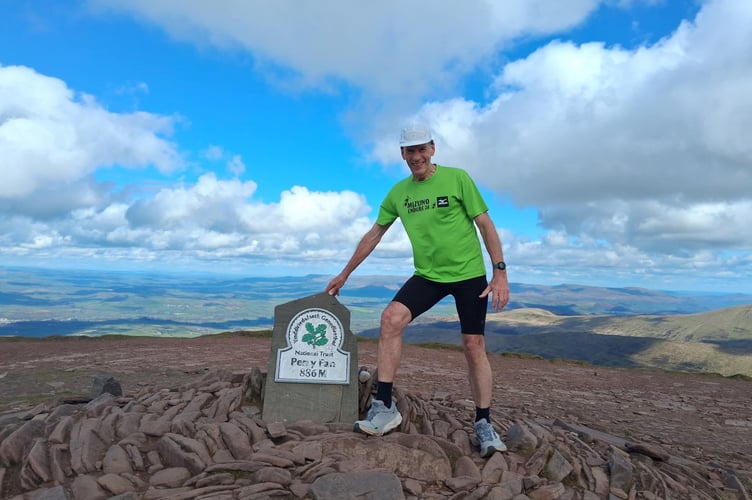
As the UK Government is expected to make a final decision on a screening programme for prostate cancer this month, Prostate Cymru is calling for men to be routinely tested.
Last year, the National Screening Committee (NSC) opened a public consultation following its draft decision to advise government against screening for all men. That’s despite the fact that one in eight men get prostate cancer.
Nor did it back a screening programme for black men, who have double the risk of developing the disease, or for those with a family history.
It is anticipated that the Government will discuss the NSC’s final recommendations in the next week or so.


Prostate Cymru Chair Andy Thomas - a recently retired consultant urological surgeon - said: “Early diagnosis is key. In Wales, the impact of prostate cancer is significant, affecting 1 in 8 men, and 1 in 3 with a family history. Often, it doesn’t present with any symptoms so it is essential that men get tested.
“Currently, you only get tested if you request it – or if you have a proactive GP that recommends it. But we constantly hear of men who have difficulties in getting a GP appointment, and in some cases even being refused a test. And what about the men who don’t think to ask for a test? We need a screening programme.”
Because so many men struggle to get a test through their GP, Prostate Cymru ran its own testing events last year and is doing so again this summer – with the help of commercial sponsors. In 2025, 200 men received a red alert after going along to an event, advising them to seek medical advice immediately. That was almost six per cent of all those tested by the charity.
“We do what we can,” added Mr Thomas. “But we are a charity and we simply cannot test everyone. The government needs to be more proactive in raising awareness among those most at risk and it needs to educate and advise GPs so that men aren’t refused tests or feel dissuaded.”
One man who says the issue highlights the importance of early detection is Brecon‘s Paul Rowe, who discovered he had prostate cancer after attending a Prostate Cymru testing event.
“I found out I had stage 2 cancer after going to a Prostate Cymru test event – but we need a national screening programme,” he said.
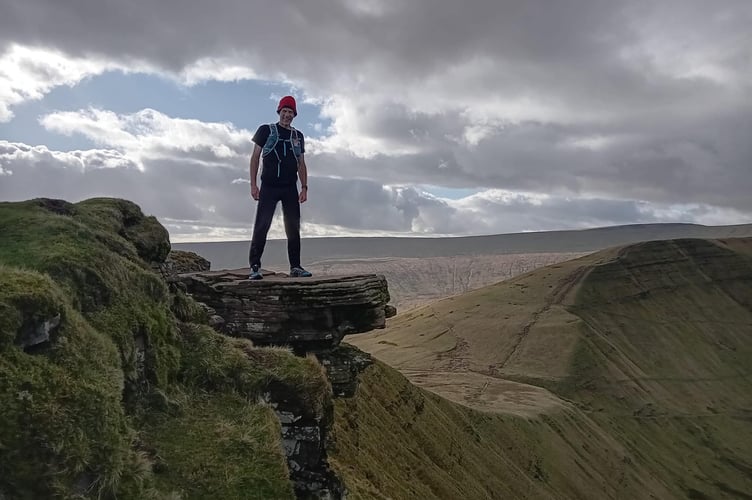
As an ultramarathon runner, Paul, 65, felt in good health. But after his brother was diagnosed with prostate cancer at the age of 55, Paul – a retired nurse - knew he couldn’t ignore the risk.
His brother, David, was first diagnosed in 2014, prompting Paul to see his doctor and request a PSA test. His levels were low.
Then, years later, his brother got the news that his cancer had spread to his lungs. So, soon after, in 2024, Paul went to his doctor again. This time, his levels were just below the threshold for further investigation.
He was experiencing very minor symptoms and, running up to 68 miles, he was fit and active. But something didn’t feel right.
Seeing the advert for the PSA testing event in Brecon in 2025, he signed up – even though it was just 12 months since his last test. Like 200 other men who went along to our events (that’s 6 per cent of people who attended), he received a red alert.
Immediately, he went to his GP.
“I was told not to worry and that the PSA test is often unreliable,” he said. “I didn’t feel as if they were going to do much about it. It was only after I spelt out my family history that he agreed to do another test in a month’s time.”
The second reading also showed high levels of PSA. His doctor explained they would ask the local urology department for further advice. But, in the meantime, Paul started bleeding and, living near the border, he was referred to Hereford and was seen within a week.
“Knowing what my brother is going through, I was feeling very anxious,” he explained.
He was told he had stage 2 prostate cancer. That means the cancer is larger but it is still confined to the prostate. He has since undergone a prostatectomy.
-from-brecon-with-brother-David.jpeg?width=752&height=500&crop=752:500)
His overwhelming feeling is that of relief.
“I've been really pleased with the care I've had but I dread to think what would have happened if I hadn’t gone to the Prostate Cymru test event,” he said. “It's the best £10 I've ever spent.”
Paul is now back running and is being closely monitored. But because of his experience and that of his brother, he is now urgently asking the government to introduce a national screening programme.
He said: “We need regular testing. I have always had to ask for a test and that shouldn’t be the case. Fortunately, because I was a nurse, I knew I needed to do that. But many men don’t. I have two sons who are 40 and 38 and I’m nagging them to get tested.
“Fortunately, I was caught in time but it could have been a different story completely.”
Most men with early prostate cancer do not have any signs or symptoms, which is why it is important to understand your personal risk and seek advice where appropriate.
Changes in urination are more commonly linked to non-cancerous conditions, such as an enlarged prostate, or other health issues. However, it is still important to have any changes checked by a GP.
Possible symptoms can include difficulty starting to urinate or emptying the bladder, a weak flow, or a feeling that the bladder has not fully emptied. Other signs may be dribbling urine after finishing, needing to urinate more often than usual - particularly at night - or a sudden urge to urinate, sometimes with leakage before reaching the toilet.
While these symptoms do not necessarily mean cancer is present, early assessment can help identify any underlying problem and ensure appropriate treatment or reassurance is given.
Comments
We've recently changed our login process. If you have an account for commenting, you will need to re-register on the login window.
This article has no comments yet. Be the first to leave a comment.