

-and-Jamie-Bocock-with-the-1818-Hobby-Horse.jpeg?width=752&height=500&crop=752:500)
One of the world’s rarest bikes, a 1818 ‘Hobby Horse’, has been donated to the National Cycle Museum in Mid Wales.
The forerunner of the modern bicycle, which was also known as the 'Dandy Horse', is currently being prepared for display in a glass case donated by the Radnorshire Museum. Both museums are located in Llandrindod Wells.
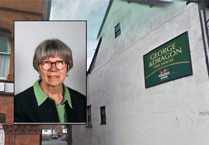
“This original Johnson ‘Hobby Horse’ is extremely rare and shows how the first type of bicycle was designed with no brakes or pedals,” said Freda Davies, museum trustee and curator. “It was mainly made from wood and our focus is on preventing further damage from woodworm.
“The ‘Hobby Horse’ is one of four bikes donated by Pitt Rivers Museum in Oxford, which has been its home since 1905. Having an original ‘Hobby Horse’ is quite something because they are extremely rare.”
_cropped.jpeg?width=209&height=140&crop=209:145,smart&quality=75)
The other bikes donated by Pitt Rivers Museum are a ‘Bone Shaker’, a Penny Farthing and a lady’s Safety Bicycle.
Invented by the German Baron Karl von Drais in France in 1817, the ‘Hobby Horse’ was introduced to England the following year by Denis Johnson, a coachmaker of Long Acre, London, who described it as a “pedestrian curricle”.
The rider propelled the machine by pushing their feet along the ground and gliding between strides, as pedals had not yet been invented. As brakes had not yet been invented, the rider’s feet had to be dragged along the ground to slow the machine.
Original ‘Hobby Horses’ were made with a timber or iron frame and wooden wheels with metal band tires. They featured a padded seat and handlebars attached to a pivoting fork for steering the front wheel, with an armrest for stability.
Johnson launched a school where prospective purchasers could learn how to ride the machine and, in 1819, riding a hobby horse became a craze for fashionable London society.
Original ‘Hobby Horse’ bikes are rare museum pieces, but high-quality, rideable replicas can be purchased from vintage cycle specialists and auction sites.
The National Cycle Museum has been located in the Automobile Palace, Llandrindod Wells since 1997 and has more than 200 cycles and cycling memorabilia covering the evolution of cycling from the early 1800s to the present day.
The museum, which also has a copy of the ‘Hobby Horse’, has exhibits ranging from Victorian solid-tyred machines to the latest racing models. It’s the UK’s main cycle museum and one of the world’s best.
From January until March, the museum is open on Mondays from 10am to 4pm. Run by volunteers, it costs more than £20,000 a year to keep open the museum, which relies on the generosity of supporters and visitors to finance its work.
A popular visitor attraction, the museum is a member of MWT Cymru, an independent organisation representing more than 600 tourism and hospitality businesses across Powys, Ceredigion and Southern Eryri.
For more information or to support the museum, visit: www.cyclemuseum.org.uk
Comments
We've recently changed our login process. If you have an account for commenting, you will need to re-register on the login window.
This article has no comments yet. Be the first to leave a comment.