
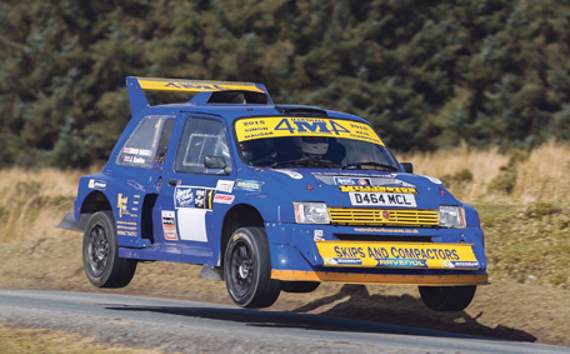
THE world famous Wales Rally GB could be in jeopardy due to a proposed increase in the cost of using Welsh forestry roads, it has been claimed.
Powys council is supporting the Motorsport Association in its battle with the Welsh Government’s environment body, Natural Resources Wales (NRW) over the proposed fees.
It intends to double the cost charged for using forest tracks for rallying, including for the Wales Rally GB which has held stages in Powys for a number of years.
Council leader Barry Thomas, who is to write to the Welsh Government, said he fears the event, and other rallies, could be lost to Wales as a result.
.png?width=209&height=140&crop=209:145,smart&quality=75)
The Motorsport Association claims research shows rallying is worth £15m a year to the Welsh rural economy. More than 84,000 people attend the Wales Rally GB each year.
NRW says there is a £300,000 difference in the cost of repairing the roads and what it charges for the use of them.
Cllr Barry Thomas said the council fears NRW’s proposed fees could have a negative impact on Powys’ economy. He said: "The motorsport community has expressed deep concerns about these plans and have indicated a dramatic increase could result in Wales, and in this case Powys, becoming unattractive for hosting rally events.
"This could force event organisers to move the events to England and Scotland, especially as the Forestry Commission has renegotiated contracts with the Motorsport Association and limited any increase to 0.7% from the previous rate."
The Wales Rally GB will take place between October 27 and 30 this year with several stages in Powys. In previous years the rally’s service area has also been based at the Royal Welsh Showground in Llanelwedd.
Powys also hosts more rally events than any other county in Wales.
However there are fears the proposed increase for using Welsh Government owned land could mean the Wales Rally GB, which is a round of the FIA World Rally Championship, is no longer staged in Wales beyond this year.
Cllr Thomas said: "The Motorsport Association claims that the researched economic benefit to the rural Welsh economy from rallying is approximately £15million a year.
"We are very fortunate that the majority of events across the principality take place in Powys, with more events held in the county in one year that in all other Welsh councils put together.
"One of our strategic objectives is the economic well-being and regeneration of our communities and these rallying events are very important to the Powys economy. The income generated for Powys businesses by rallying and other sporting events are essential if we are to build a thriving economy.
"We have been working with the Welsh Government over the past year to produce a policy for motorsport within Powys that provides clarity to motorsport event organisers, whilst also ensuring they comply with highway legislation.
"This is to try and promote as many safe motorsport events within the county as possible so that our rural assets can be used to benefit the local economy while ensuring residents and visitors remain safe in the countryside.
"We need Wales and Powys to have a ‘can-do’ approach, where events and businesses are encouraged to grow and thrive. It is essential that we make the most of our many natural assets.
"It would be a great shame if this work was undermined by a policy that might have the opposite effect of increasing income by driving activity out of Powys, and Wales.
"We will be writing to the Welsh Government now with our concerns. We will also raise our concerns directly with Natural Resources Wales, who are not a statutory member of the public service boards."
NRW has said it has played a major role in supporting motorsport and enjoyed a successful working relationship with the Motorsport Association in staging all levels of rallying.
But said in a statement: "In early 2014, it became apparent that there was a significant discrepancy in the amount it cost NRW to prepare and reinstate its forest roads for rallying and the fees paid by the MSA.
"This meant that in 2015 the MSA paid NRW £339,000 in stage rally charges, including their flagship event Wales Rally GB, but the actual cost to reinstate the roads used for rallying was £655,000.
"The latest master agreement for stage rally charges expired in 2015, but we agreed to hold the existing charge until May 2016 at MSA’s request, to provide further opportunities for discussion.
"While NRW recognises that any increase in charges would impact on the sport, as a publicly funded body we have a duty to ensure the public purse is properly recompensed for costs incurred in preparing and reinstating those parts of our forests used in rallying events."
David Edwell, NRW’s head of enterprise, said the it had started its ongoing discussions with the MSA over the fees increase earlier this year to try and resolve the problem.
He said: "We hope we can find a solution so we do not lose rallying from happening in our forests."
Ben Taylor, managing director of the Dayinsure Wales Rally GB, said: "NRW and the Motor Sports Association are in negotiations about the charges levied for repairing the roads used by stage rallies.
"NRW is an important partner in stage rallying in Wales and we are confident that an agreement can be reached that will safeguard the whole of the sport in Wales, including Wales Rally GB."
Comments
This article has no comments yet. Be the first to leave a comment.