

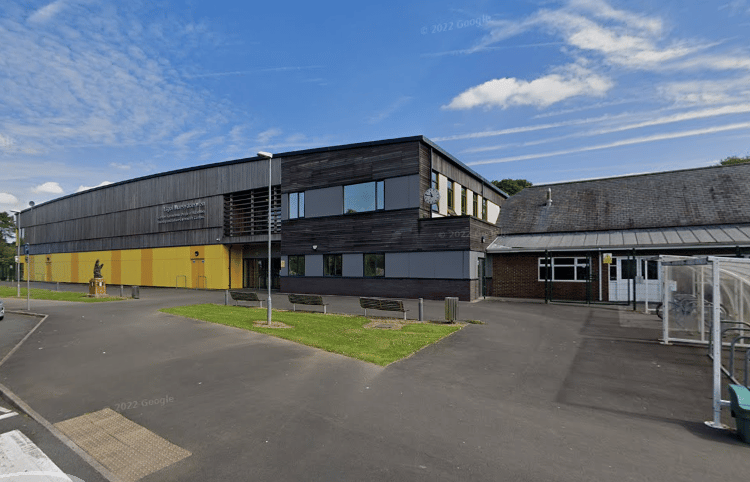
A new approach to school discipline has seen fixed-term exclusion rates at a Powys secondary school plummet.
At a meeting of Powys County Council's Learning and Skills Committee on Friday, June 5, councillors and independent lay members were given a presentation on the work being done with consultants to improve behaviour in schools.
During the last year, Ysgol Maesydderwen secondary school in Ystradgynlais has been working with Adele Bates Education to improve pupil behaviour.
Ysgol Llanfyllin, an all-through primary and secondary school, has also been working with the Sussex-based company.



Several other schools in Powys are also expected to receive help in the coming months.
The aim of the work is to: "improve behaviour culture, provide expert guidance and ensure tailored approaches and sustainable solutions to create a positive and supportive learning environment."
Maesydderwen headteacher Phil Grimes said: "When I first became headteacher in 2018, there were very few behavioural issues in the school and figures were low for fixed-term exclusions."
He explained that staff at the time were able to manage pupils effectively and there wasn't the need for "advanced behaviour management skills".
Then the Covid-19 pandemic happened, which saw schools close for periods of time and pupils taught online.
There were also a couple of years of children who had their entry into school life disrupted because of the health emergency.
Mr Grimes said: "After Covid, the school has significantly changed and even though staff had very good working relationships with a significant number of our children, like many schools we struggled with some of our youngsters.
"He explained that some children were coming up to the secondary school with "underdeveloped" skills and that staff were not "ready and prepared" to deal with the new, more challenging behaviour.
Mr Grimes said: "What we were experiencing were learners with more extreme poor behaviour, especially out of lessons, in the corridor or the yard – and we struggled to get learners into class.
"There was an over-reliance on fixed-term exclusions to respond to the behaviour."
He said that during 2022/23 the school gave out 150 fixed-term exclusions, totalling 238 days.
In 2023/24, 148 fixed-term exclusions were handed out, totalling 249 days.
Mr Grimes said: "We were excluding learners, they were having a day at home, and we expected their behaviour to change when they came back in. To think along those lines is madness in many respects.
"We needed to do something."
This is when Keith Bates of Adele Bates Education was brought in to advise the school.
Mr Grimes said that there was a need to find alternatives to exclusion and they developed the "enhanced consequences" system, which provided a more "restorative approach" to modify pupils' behaviour.
Mr Grimes said: "We would work with learners to identify the reasons for misbehaviour: what were the triggers and barriers and work with them to modify their behaviour and habits, so they didn't get into that situation again."
He added that there was also a need to convince staff to buy into the approach.
Over time, the school culture changed.
Mr Grimes said: "As a result of the work, levels of extreme behaviour have declined and enhanced consequences have been working.
"The impact of the work over 18 months or so is that fixed-term exclusions went down to 52 last year (2024/25), totalling 62.5 days, and this year it's down to 13 exclusions.
"Instead of being reactive to behaviour problems we're being proactive and getting underneath these emerging issues early, so we get that prevention in place and it doesn't get to that situation."
Committee chairman Cllr Gwynfor Thomas thanked them for the presentation and said: "That's a very useful session for us and helps us understand where we are with things."
Comments
This article has no comments yet. Be the first to leave a comment.