

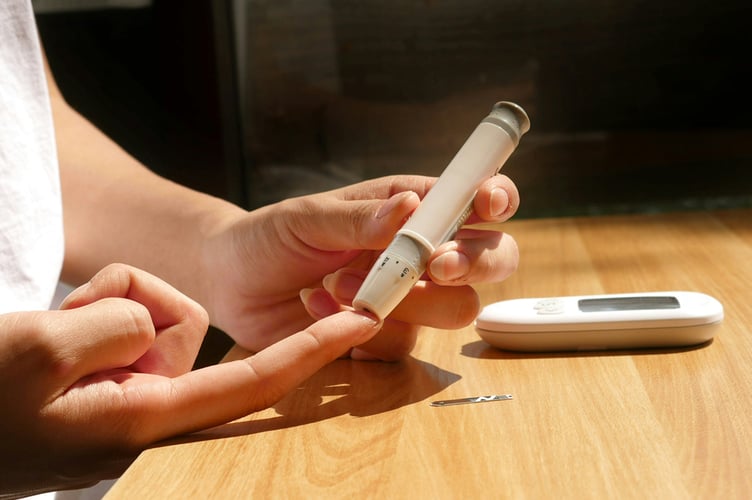
The number of people living with diabetes in Wales is rising faster than previously projected, new data from NHS Wales has revealed.
The data has prompted Public Health Wales (PHW) and Diabetes UK Cymru to join forces and call on people to know their risk of Type 2 diabetes and act now.
The latest figures from 2025 show that 230,371 people aged 17 and over in Wales are now living with diabetes - an increase of 7,685 people, or 3.5 per cent, in a single year (222,686 in 2024). This rate of growth significantly outpaces projections made by PHW in 2021/22, which forecast that Wales would reach 260,000 - or one in 11 people diagnosed as living with diabetes - by 2035. At current rates of growth, that milestone could arrive considerably earlier.
A further 269,747 people in Wales are estimated to be living with prediabetes - placing them at very high risk of developing the condition - and an estimated 58,906 people are living with undiagnosed Type 2 diabetes, unaware of the damage that may already be occurring. In total, approximately one in five adults in Wales is currently living with diabetes or prediabetes.


Type 2 diabetes accounts for most cases. Left unmanaged, it can lead to serious complications including sight loss, kidney disease, nerve damage, and cardiovascular disease - robbing people of their independence, their quality of life, and, in too many cases, years of their lives. The condition disproportionately affects people living in areas of greater social and economic challenge, and those from South Asian, Black African, and Black Caribbean backgrounds.
However, with early action, Type 2 diabetes can often be prevented entirely. For those already living with the condition, remission may be possible - and with the right knowledge and support, people can live well with diabetes and avoid the complications that previous generations experienced as inevitable.
Now, PHW and Diabetes UK Cymru are coming together to urge people across Wales to search “lower my type 2 diabetes risk Wales” so they can take the free Diabetes UK Know Your Risk tool as a first step, and then get further information on a range of services that can help lower their risk, such as the All Wales Diabetes Prevention Programme (AWDPP), Healthy Weight Healthy You offer, Let’s Prevent app and Diabetes Resource webpages.
David Taylor, Transformation Director at the Tackling Diabetes Together Programme at PHW, said: “This rapid increase of people now being diagnosed with Type 2 diabetes is a national crisis for Wales, but thankfully it is one we can respond to.
“Being diagnosed with Type 2 diabetes is never about it being that person’s fault, but often, if that person had had access to the right information and was given the support they needed early enough, then lowering their risk, pushing their diagnosis back or reducing future complications if diagnosed, are all very real possibilities.
“We want to support people to live long and healthy lives in Wales and to do this we need to increase public knowledge of both risk – and how to reduce this risk. These don’t have to be huge life changes. Even small actions like taking a 10-minute walk after meals can help. Prevention is often achievable if we act early.”
Rachel Burr, Director of Diabetes UK Cymru, said: “It’s important to find out whether you’re at risk of developing Type 2 diabetes – so you can take action to protect your health. By using our simple Know Your Risk online tool, you can get advice on whether you’re at risk and receive guidance on what steps to take next. It's free and only takes a few minutes.”
Dr Sarah Davies, GP in Cardiff and Primary Care Lead for Diabetes in Wales, said: “We are seeing rising numbers of people being diagnosed with Type 2 diabetes in Wales, with especially fast-growing numbers in people under the age of 40.
“We see Type 2 diabetes more commonly in people with strong family histories of Type 2 diabetes, in people who live with overweight, obesity or other conditions such as high blood pressure. If we can support people to understand their risk of developing Type 2 diabetes and how they can take action to reduce it, we can make a real difference to lives and also reduce the impact on the health care system. If a person does develop Type 2 diabetes, the sooner we know about this the better because together we can take early action to reduce the risk of complications such as kidney, eye or heart conditions occurring later.”
Alex Hicks was first diagnosed with Type 2 diabetes in his early 30s. Having always been very active in his teenage years and into his 20s, he experienced some lifestyle changes as his family grew and work pressures took up more of his time. Even though Alex had some family history of late-onset Type 2 diabetes, he hadn’t appreciated that he may have been at risk at such a young age, and so his diagnosis came as a complete shock.
After a weekend stay in hospital, being kept under observation and receiving the formal diagnosis of Type 2 diabetes, Alex jumped into action, making exercise a key part of his daily routine by cycling to work, in addition to changes to his diet. After a short while, he was able to bring his blood glucose back into a normal range, coming off metformin medication and maintaining it for over a decade. But it hasn’t always been straightforward.
Alex said: “When the pandemic hit, my opportunities to exercise diminished overnight and I found myself working long hours from home and leading a more sedentary lifestyle. Before I knew it, some of those symptoms had crept back, so I feared the worst and after a visit to the GP and a blood test, it showed my blood sugars were high again.
“I was in denial to start with, because I was quite disappointed having managed my condition so well for over ten years. I had to have a reset to work out how I was going to manage it this time as it was a lot more stubborn than before and I was quickly on the maximum dosage of metformin.
“I’d heard of the X-PERT Programme through my work and had previously talked myself out of it because of the time commitment. But after getting a referral from the GP and adjusting my work pattern to accommodate the two-hour-a-week commitment for six weeks, it was through this programme I heard about Counterweight for the very first time.
“It was the Counterweight dietician that has really made the difference. Through their expertise, coaching and support, combined with the total diet replacement programme, I have been able to come off all the diabetes medication and have lost 20 per cent of my total bodyweight. Having the support of the Counterweight programme and its coach has been a real gamechanger for me maintaining a healthy lifestyle. I have still been able to take part in charity cycle rides and my last blood test has taken me back into the normal range, which is great.”
To find out your risk and access support, go to: phw.nhs.wales/knowledge-article/lower-your-risk-of-type-2-diabetes
Comments
We've recently changed our login process. If you have an account for commenting, you will need to re-register on the login window.
This article has no comments yet. Be the first to leave a comment.