
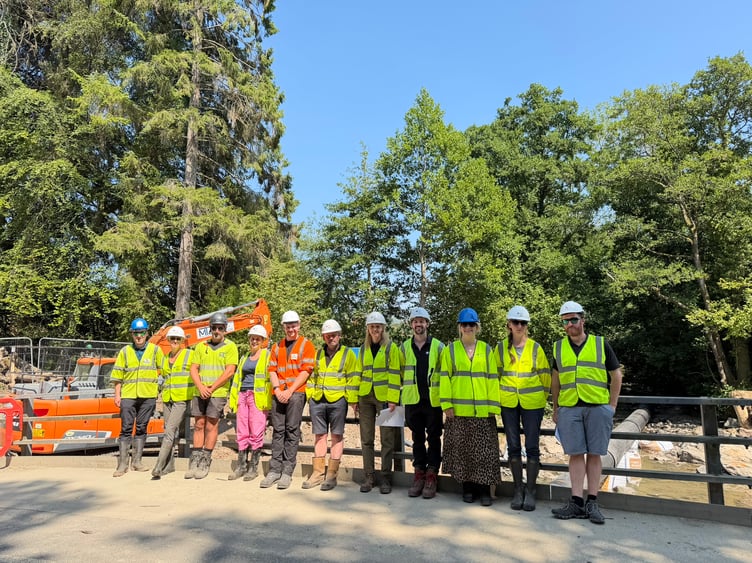
Two major river restoration projects near Builth Wells are underway, with more than 18km of river habitat set to be reconnected for fish and other wildlife.
Natural Resources Wales (NRW) is working with Powys County Council to replace two ageing pipe, or “Irish”, bridges on the rivers Cammarch and Duhonw with new clear-span structures.
The existing bridges act as barriers in the rivers, restricting the movement of fish and sediment. Gravel and woody debris can also become trapped against the structures during periods of high flow, creating additional maintenance problems.
The new bridges will remove the barriers and allow the rivers to flow more naturally, while also providing more resilient crossings for landowners.
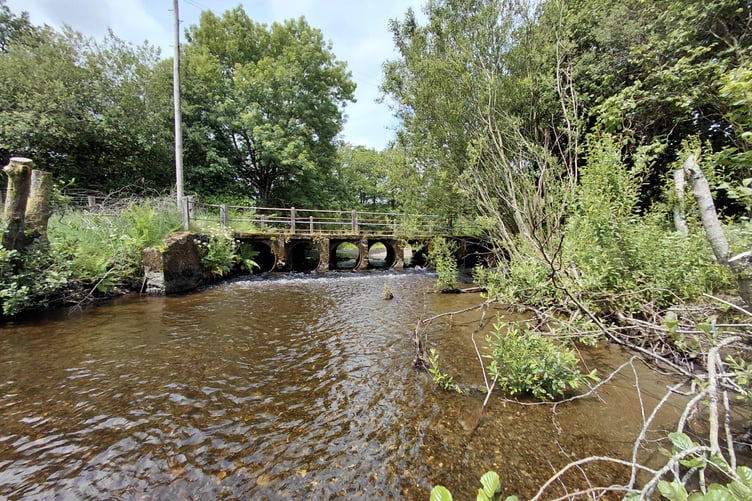
The upper reaches of the Cammarch and Duhonw are important spawning grounds for species including Atlantic salmon, which is threatened in Wales.
NRW said the two projects will reconnect more than 18km of upstream habitat for Atlantic salmon, lamprey and bullhead.
They will also allow gravel to move naturally through the rivers, helping to create the clean and healthy conditions needed for fish eggs to survive.
The work forms part of NRW’s Upper Wye Catchment Restoration Project, which aims to improve the condition of the upper River Wye Special Area of Conservation.
The project is being funded through the Welsh Government’s Nature and Climate Emergency Fund and involves working with farmers, landowners and local organisations on nature-based solutions to improve water quality, restore habitats and make rivers more resilient to climate change.


Before construction began on the Duhonw bridge, NRW specialists carried out a fish rescue to protect wildlife while the river was temporarily diverted.
Using specialist electrofishing equipment, the team safely captured and relocated five Atlantic salmon parr, 12 bullhead, two eels and around 50 trout fry and parr.
The fish were moved to a suitable stretch of river downstream before construction work started.
Electrofishing is carried out by trained operators and temporarily stuns fish, allowing them to be safely captured before recovering and being released into suitable habitat.
NRW said the rescue demonstrated the importance of carrying out fish rescues before work takes place in rivers, while also highlighting the need to remove the existing pipe bridges.
Project lead Susie Tudge said the partnership with Powys County Council had allowed the two projects to progress and deliver “lasting environmental benefits”.
“Fish and other wildlife using these tributaries will feel the effects straight away, while the wider community will also benefit from healthier, more resilient rivers,” she said.
“At a time when our rivers face increasing pressures, we are proud to be taking positive steps to strengthen these important tributaries of the River Wye.”
Construction work on both bridge replacement projects is now underway.
More information about the Upper Wye Catchment Restoration Project can be found on the NRW website.
NRW also produces a quarterly e-newsletter with updates on the project, along with stories and insights about the Upper River Wye. People can sign up to receive the newsletter and stay informed about the latest developments.
Comments
We've recently changed our login process. If you have an account for commenting, you will need to re-register on the login window.
This article has no comments yet. Be the first to leave a comment.